


 20/10/2026 16:11:17
Spending hours looking down at screens inevitably leads to a stiff, tired, and tight upper body. This modern ailment is known as text neck syndrome, and it refers directly to the discomfort caused by heavy device use and a forward-leaning head posture. By understanding how these habits strain your muscles, you can easily introduce small postural changes and effective recovery methods, such as targeted massage. Here is a closer look at what text neck is, why it develops, and the most reliable ways to treat it.
Text neck happens when the muscles around your neck, shoulders, and upper back work continuously to hold your head up.
In that position, the muscles that run up the back of your neck and across your shoulders, mainly the trapezius, work continuously to keep your head balanced. The further forward your head drifts toward the screen, the harder they pull, because a head held out in front loads the neck far more than one balanced over your shoulders. As a result, you may experience neck stiffness, shoulder tension, headaches, and tired or aching muscles.
It helps to know that text neck is not a single medical diagnosis. It is an everyday pattern of strain rather than one specific condition. Persistent or severe symptoms should be checked by a healthcare professional.
Have you noticed your shoulders creeping up toward your ears during a long scroll? Looking down at your phone for long stretches pulls your shoulders into a rounded position and keeps your upper back from moving much. When you hold that head-forward position too long, the muscles across your neck, shoulders, and upper back can knot up.
A knot is a small area of irritated muscle fibers that have clenched into a tight ball and won’t fully relax, which is why it feels like a tiny pea or a tense band beneath the skin. These spots, known as trigger points, sometimes remain silently tender until touched, while others throb with pain even without pressure.
Some experts believe the tense fibers reduce blood flow to the area, causing it to remain sore. The daily routine repeated over time is what makes a difference, so consistent movement during the day is most beneficial.
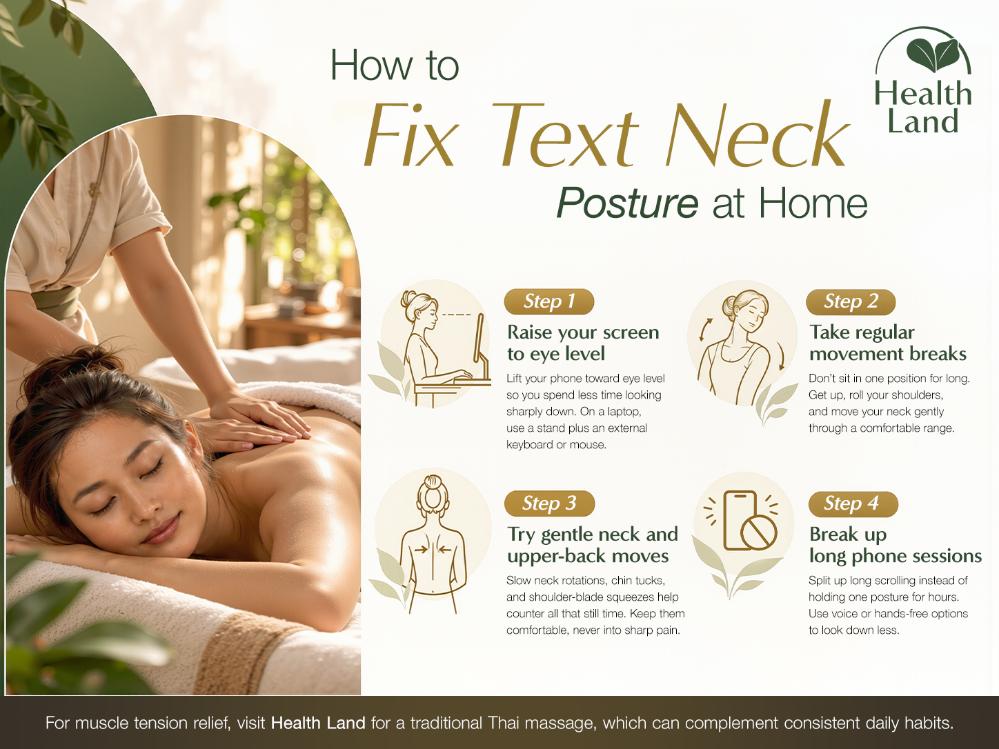
There is no single text neck treatment, but several daily habits can help:
Yes, it can help. Massage eases the tension that builds up around the neck, shoulders, and upper back after a long day staring at screens. It works best alongside better habits.
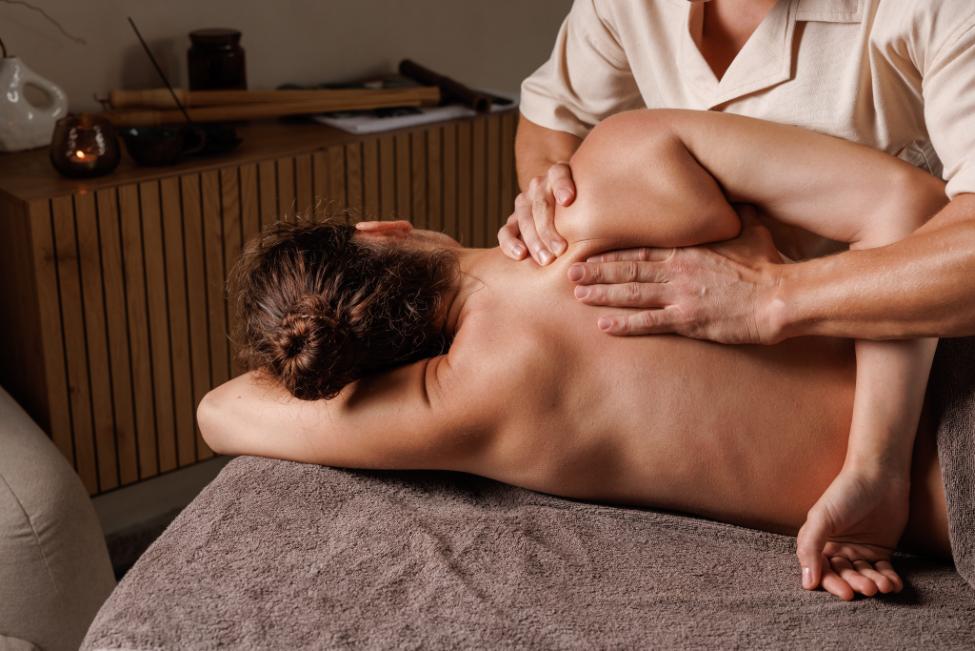
Thai massage suits this setting perfectly, blending well with the tranquil surroundings. It employs pressure, compression, and assisted stretching, engaging the muscles more dynamically.
At Health Land, the scent of herbal remedies fills the air as two traditional treatments offer potential relief for text neck. Point out any sore or sensitive areas at the start so your therapist can adjust the pressure to suit your comfort.
Either one slots neatly into a wider routine of regular movement and better screen setup.
Text neck is closely tied to one everyday habit: spending long stretches looking down at a screen. Small changes like raising your screen, moving often, and adding gentle exercises reduce the time your neck spends stuck in one position. When your neck and shoulders feel tense, a Thai massage and spa session offers a mix of pressure and assisted stretching that complements consistent daily habits.
At Health Land Spa and Massage, traditional Thai massage provides a practical, hands-on solution to screen-related fatigue and everyday muscular tension. Secure your session at any of our branches across Bangkok, Pattaya, and Chiang Mai. We welcome walk-in guests, or you can conveniently book your reservation online daily from 9:00 a.m. to 11:00 p.m. Reserve your treatment today.
References:
Q: Why do I get muscle knots in my neck and shoulders from my phone?
A: Holding your head forward over a phone keeps the trapezius and nearby muscles in sustained contraction. Over time, parts of the muscle stay tense and tender, which is the taut band you feel as a "knot."
Q: How do I fix text neck posture at home with exercises?
A: Raise your screen toward eye level, take regular movement breaks, and add gentle moves like slow neck rotations, chin tucks, and shoulder-blade squeezes within a comfortable range. Break up long phone sessions rather than holding one position for hours.
Q: Can Thai massage help with text neck?
A: It can ease the tension that builds around the neck, shoulders, and upper back from screen use. Thai massage uses pressure and assisted stretching and works best as part of a routine with regular movement and better screen setup.
Q: How do you relieve text neck?
A: A combination tends to work best: adjust your screen height, move and change position often, do gentle neck and upper-back exercises, and use massage to relax tense muscles. Persistent or severe symptoms should be checked by a professional.
Q: Can poor phone posture cause headaches?
A: Prolonged poor posture can cause tension through the neck and shoulders, which can also cause headaches. If headaches are frequent or severe, see a healthcare professional rather than assuming screen strain is the only cause.






Share With :