


 20/10/2026 16:33:58
Long hours at a desk often leave the neck, shoulders, and upper back feeling tight, especially when held in static positions. The question of how to improve posture arises frequently, and the solution is straightforward: changing positions regularly, strengthening key muscles, and adjusting your workspace all help. While massage plays a supportive role in improving your posture by releasing localized muscular tension, it is not a standalone cure. Read the following guide to discover practical steps that actually work.
If you’re looking to improve your posture, build some of these habits into your daily life:
Slouching often feels easier precisely because the muscles that hold you upright tire out over a long sitting stretch. The solution is to give this group of muscles regular breaks. It helps to think of posture as something that shifts throughout the day, not a single position you have to lock into and hold.
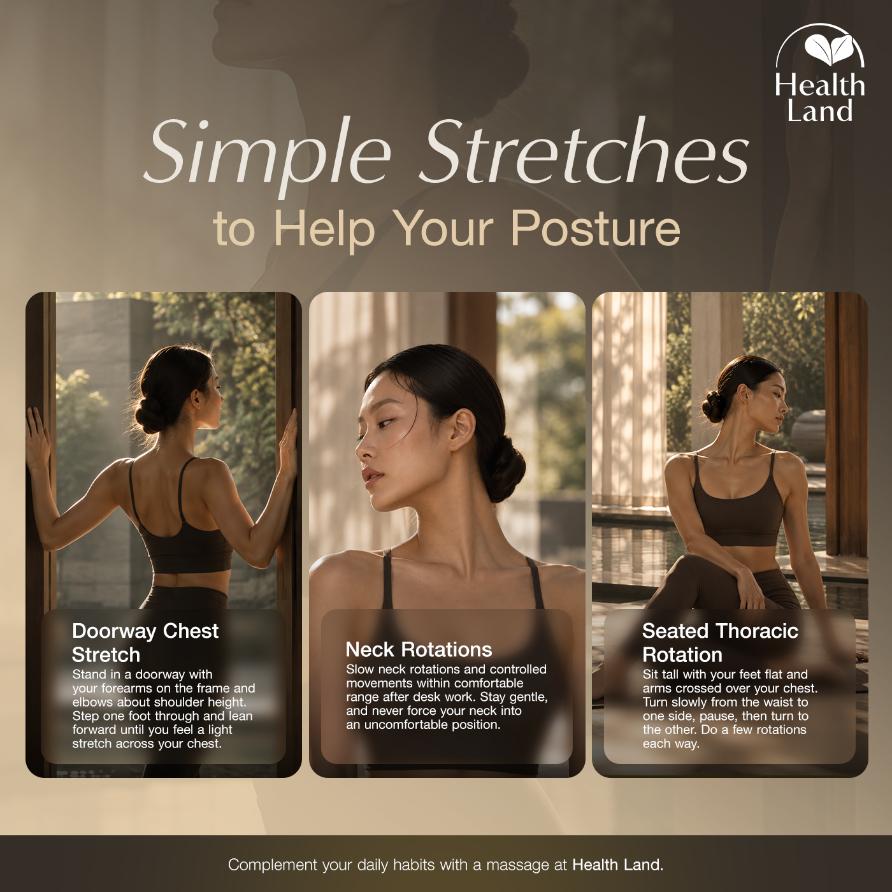
No single stretch changes posture on its own, but a few done consistently help counter long periods of sitting. Here are simple options for each area, with steps you can follow at your desk. Keep every movement within a comfortable range, and stop if anything feels sharp.
Steady effort holds more weight than discovering a single moment that transforms everything instantly. Try to do a brief set once or twice daily, preferably to interrupt long periods of sitting instead of leaving it all for the evening. Taking even a minute or two between tasks can provide a refreshing pause.
Thai massage does not literally "correct" posture, but its mix of pressure and assisted stretching may help with the muscular tightness that tends to come with prolonged sitting.
Because tension in one area often pulls on another, working the hips and legs as well as the shoulders can relieve more than treating the sore spot alone. If posture concerns come with persistent pain, numbness, or weakness, consider getting a professional assessment with a healthcare provider.
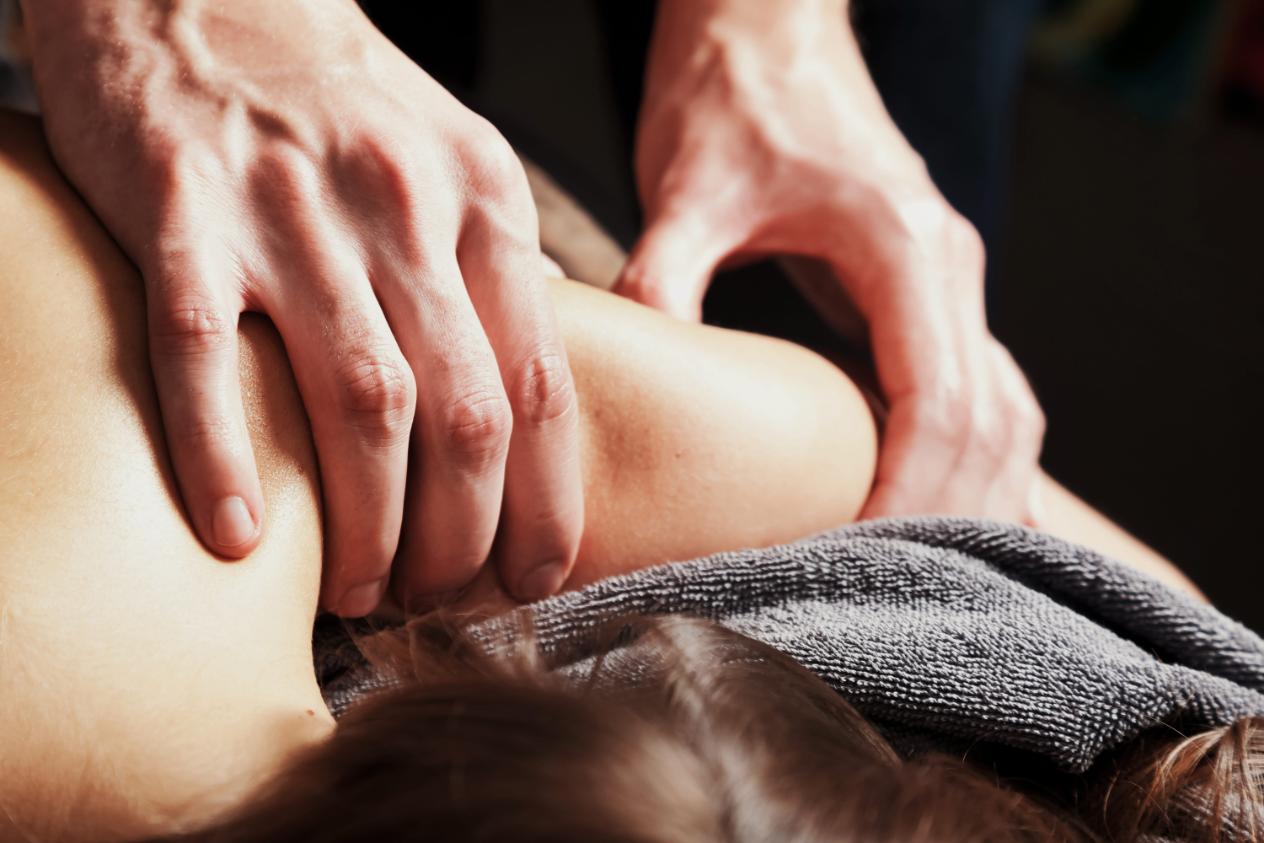
There is no single massage for better posture that is best for everyone. The right fit depends on what you want from the session.
If you are new to massage or sensitive to firm pressure, an aroma oil session is an easy starting point. If stiffness is your main issue, the assisted stretching in a Thai massage tends to suit you better.
Massage can ease your tension and make you feel less confined, but real, lasting improvement comes from daily movement, building strength, and adopting better working habits. Incorporate it into a broader routine instead of relying on it as a standalone solution.
Improved posture arises from daily fundamentals: consistent movement, appropriate stretching and strengthening exercises, and a workstation set up for comfort, all contributing gradually over time. Thai massage can enhance those routines by easing the muscular tension and stiffness that accumulate from sitting for extended periods, accompanied by the soothing scent of herbal oils.
A massage in Chiang Mai at Health Land offers a traditional, hands-on way to step away from the desk, move differently, and give tense muscles some attention across the neck, shoulders, back, and legs. This treatment focuses on deep, full-body stretching to effectively relieve muscular tightness and everyday aches. Walk-ins are welcome, and online reservations are available daily from 9:00 a.m. to 11:00 p.m.
References:
Q: How can I fix my posture after sitting at a desk all day?
A: Change position often rather than sitting for hours, set up your screen and chair so you are not leaning forward, take short movement breaks, and build in regular stretching and strengthening. Treat posture as something that shifts through the day, not one fixed position.
Q: Which stretches improve posture the fastest?
A: Chest and shoulder stretches, gentle neck mobility, and upper-back movements all help counter desk sitting. There is no instant fix, though. Consistency over days and weeks does more than any single stretch done once.
Q: Does Thai massage help correct bad posture?
A: Thai massage does not literally correct posture, but its pressure and assisted stretching may ease the muscular tightness that comes with long sitting. It works best alongside movement, stretching, and strengthening, not as a standalone fix.
Q: What is the best massage for posture?
A: There is no single best option. Thai massage suits stiffness across the shoulders, back, and hips, while aroma oil massage suits those who want to relax while easing general tension. Lasting change still comes from everyday movement and habits.
Q: How often should I get a massage for posture?
A: There is no set frequency. Massage can be a regular part of a wider routine that includes movement and exercise, but if posture concerns come with ongoing pain or other symptoms, see a healthcare professional rather than relying on massage alone.



Share With :