That nagging ache that never quite goes away? It might be your trigger points.
Trigger points are specific knots in muscle tissue that create pain far beyond their small size. These tight bands of muscle fibers can cause localized discomfort or send pain to other parts of your body. What makes them so frustrating is their stubbornness.
Stretching alone rarely resolves them. Rest doesn't always help. This is where specialized trigger point therapy makes all the difference.
At Health Land Spa, we've spent over 20 years perfecting the integration of traditional Thai massage with targeted trigger point work. Let’s discuss how our approach combines ancient healing wisdom with modern understanding of muscle dysfunction.
What are trigger points?
To begin, understanding trigger points starts with understanding how muscles function. When muscle fibers contract normally, they release after the action is complete. Trigger points develop when certain fibers remain under tension or in a contracted state. These spots may feel like small, tight knots beneath the skin.
Causes of trigger points
Several factors contribute to the development of trigger points:
- Muscle overuse from repetitive movements: Creates cumulative stress over time, causing certain muscle fibers to remain contracted even during rest periods.
- Poor posture: Forces muscles to work harder to support your body in unnatural positions, leading to chronic tension in specific muscle groups.
- Direct injury: Causes protective muscle tension as your body attempts to guard the injured area, resulting in sustained contraction.
- Chronic stress: Keeps muscles perpetually tight through the stress response, preventing full relaxation even during downtime.
- Dehydration and nutritional deficiencies: Affect muscle function at a cellular level, making muscles more prone to developing and maintaining trigger points.
Symptoms of trigger points
Trigger points create distinctive pain patterns that help identify them:
- Local pain: Occurs directly at the trigger point when pressed, feeling like a tender knot or tight band within the muscle tissue.
- Referred pain: Appears in different areas connected through nerve pathways, often far from the actual trigger point location.
- Headaches from neck tension: A trigger point in your upper trapezius might cause persistent headaches or migraines.
- Lower back pain from hip tension: Knots in your gluteal muscles can create lower back discomfort that seems unrelated to the hips.
- Restricted range of motion: Muscles containing trigger points cannot fully lengthen, limiting your flexibility and movement.
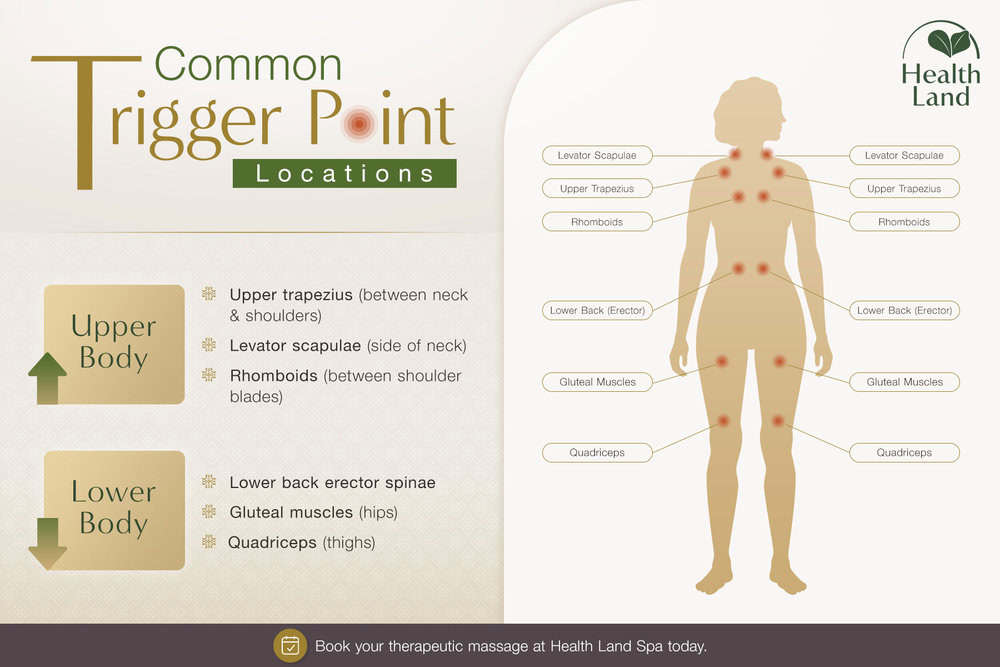
Common trigger point locations
Certain areas are more prone to developing trigger points:
- Upper trapezius: Located between your neck and shoulders, this is the most common trigger point area, especially for office workers and desk professionals.
- Levator scapulae: Running along the side of your neck, trigger points here cause a stiff neck and difficulty turning your head.
- Rhomboids: Found between your shoulder blades, these trigger points create that persistent upper back ache that won't go away.
- Lower back erector spinae: These spine-supporting muscles become vulnerable to trigger points from prolonged sitting, poor lifting technique, or repetitive bending.
- Gluteal muscles: Deep within your hips, these develop trigger points from extended sitting, long drives, or high-impact athletic training.
- Quadriceps: Located in the thighs, trigger points in this muscle are common among runners, cyclists, and individuals who engage in repetitive leg movements.
What is trigger point therapy in Thai massage?
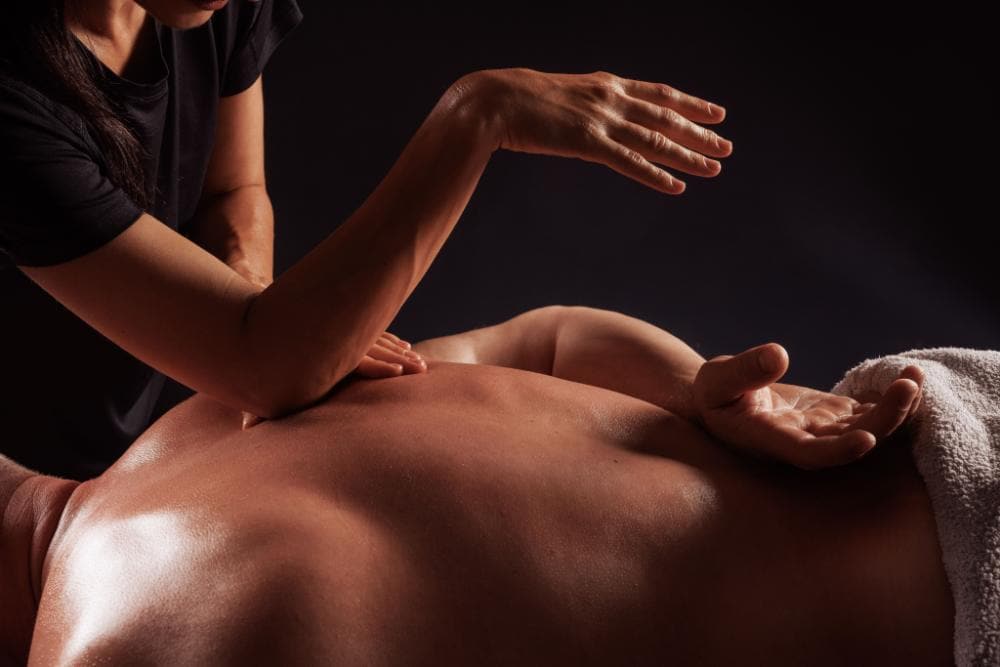
Trigger point therapy is a manual technique that applies sustained pressure directly to trigger points. This pressure disrupts the contracted muscle fibers and restores normal blood flow. The muscle then gradually releases, taking pain away with it.
Traditional trigger point massages focus solely on the knot itself. Meanwhile, Thai massage understands that trigger points don't exist in isolation. They're part of interconnected muscle chains and fascial lines that run throughout your body.
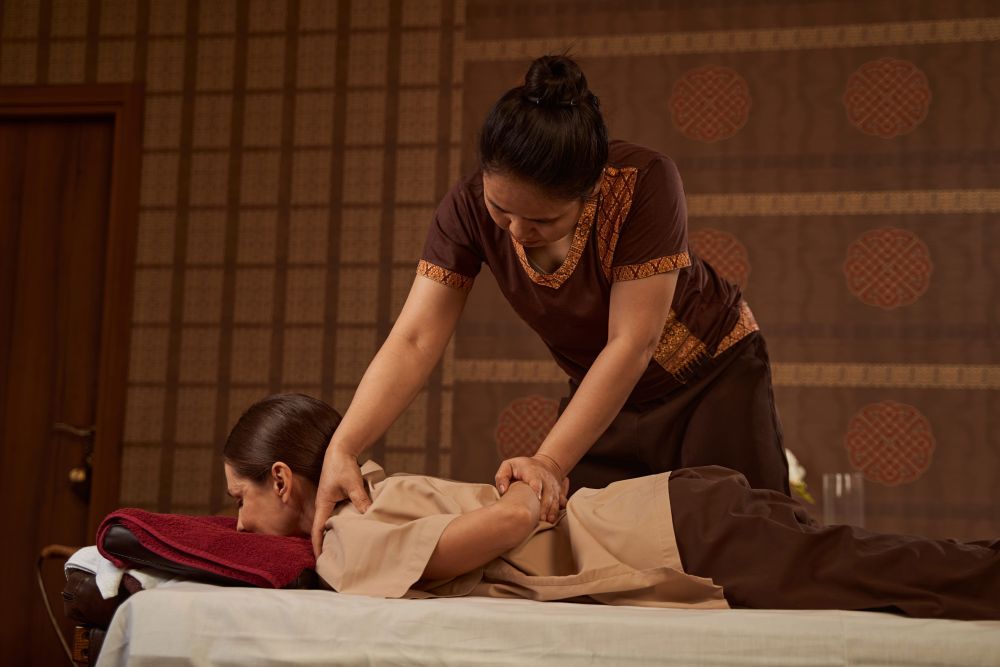
The technique combines three elements. First, targeted pressure on specific trigger points using thumbs, palms, and sometimes elbows. Second, assisted stretching that lengthens the entire muscle group containing the trigger point. Third, rhythmic compression along the muscle to improve circulation and promote tissue healing.
This differs from a general Thai massage. While traditional Thai massage systematically works through the entire body using broad strokes and stretches, trigger point therapy within a Thai massage framework takes a more focused approach. Your therapist identifies specific problem areas through consultation and palpation, then dedicates extended time to work on your problem areas.
Benefits of trigger point massages
The advantages of trigger point massages extend far beyond immediate pain relief:
- Immediate pain reduction: Many clients report significant relief even after their first session. Chronic tension that's persisted for months can ease within 60-90 minutes of targeted work as the sustained pressure interrupts the pain-spasm cycle that keeps the trigger points active.
- Dramatic mobility improvements: Trigger points restrict the range of motion by keeping muscles in partial contraction. Release them, and the muscles can extend fully again.
- Enhanced circulation: Trigger points create areas of restricted blood flow, limiting the absorption of oxygen and nutrients by muscle tissue. Trigger point massages restore healthy blood flow, speeding natural healing and reducing inflammation.
- Stress relief and mental clarity: Chronic pain creates mental tension that affects concentration and mood. When physical pain diminishes, mental clarity returns. The deep pressure work activates your parasympathetic nervous system, promoting full-body relaxation that extends well beyond the treatment session.
- Long-term preventive benefits: Regular trigger point therapy prevents knots from redeveloping as your muscles learn healthier movement patterns. You become more aware of tension building before it becomes problematic, and combined with proper ergonomics and self-care, this therapy helps break the cycle of recurring pain.
When to consider trigger point therapy
Trigger points could be affecting your quality of life. Here’s when you should seek professional help:
- Frequent headaches: If you experience tension headaches or migraines that seem connected to upper body tightness, trigger points in your trapezius, sternocleidomastoid, or suboccipital muscles may be referring pain to your head.
- Persistent neck, upper back, or lower back stiffness that doesn't resolve with rest: When you wake up stiff every morning or have constant discomfort while sitting, active trigger points are likely maintaining that tension.
- Sports-related muscle tightness that affects performance: Athletes pushing their limits develop trigger points from repetitive strain. If your flexibility has decreased or certain movements feel restricted, targeted therapy can restore optimal function.
- Repetitive strain from work or lifestyle habits: Do you spend hours at a computer? Drive long distances regularly? Perform repetitive physical tasks? These activities subsequently result in trigger point development. Addressing them proactively prevents chronic pain conditions.
What to expect in a trigger point massage at Health Land
Your Health Land Thai massage in Chiang Mai, Bangkok, or Pattaya begins way before the actual massage.
We start with understanding your body
Your therapist discusses where you feel pain, what movements aggravate it, and how long you have been experiencing pain. This information guides the treatment approach and helps identify likely trigger point locations.
Technique that balances intensity with comfort
Your therapist applies firm, sustained pressure directly to identified trigger points. This may feel intense initially. The pressure typically lasts 30-90 seconds per point as the muscle gradually releases. Between trigger point work, your therapist incorporates traditional Thai stretching to lengthen muscles and improve overall flexibility.
Choose Health Land for trigger point therapy
If you’re seeking traditional Thai massage in Chiang Mai that combines wisdom with targeted pain relief, choose Health Land. Our experienced therapists offer more than relaxation; they provide a holistic start to a pain-free life. Book your trigger point therapy session at Health Land Spa today.


 28/11/2025 16:02:42






Share With :