


 16/09/2026 14:10:42
Key Takeaways
Long hours at a computer or on your phone often settle right into the neck and shoulders, and a few minutes of self care can make a real difference before things get worse. Simple self care massage ideas, like the neck glide, shoulder squeeze, and tennis ball trick, can ease tension at your desk or on the couch, though they have their limits when the knots run deep. For a more complete reset, a full body massage package at Health Land handles what self care alone can't reach.
We carry the entire day's stress right in our upper body. Long hours at a computer or staring down at a phone screen can leave the neck and shoulders feeling like concrete by the evening, and it tends to build up quietly until one day it's hard to turn your head without noticing it. Life gets busy, but taking even five minutes for yourself can shift your whole mood. The National Institute of Mental Health lists making time for relaxing activities as one of several practical ways to manage everyday stress, and a self care massage is one of the simplest ways to fit that into a busy day. It's easy to treat tight shoulders as just part of modern life, but a few consistent self care ideas can go a long way before it turns into a bigger problem. Below are a few easy self care ideas you can try right at your desk or on the couch, along with an honest look at when it's worth booking something more.
Screen time is one of the most common triggers here. Research on computer office workers found that more than half reported some kind of neck, shoulder, or arm complaint within a year, with the neck and shoulder area among the most affected. It makes sense, since hours spent hunched toward a screen keep the same muscles locked in one position for far longer than they are built for, and the tension tends to settle in before you even notice it.
The three self care massage techniques below take just a few minutes each, need no special equipment beyond a tennis ball, and can be done almost anywhere.
Use the pads of your fingers to apply firm, comfortable pressure at the base of your skull, then slowly slide down the sides of your neck toward your shoulders. This spot tends to hold the most tension for anyone who spends the day looking down at a phone or screen.
Hook your fingers over the top of your shoulders, right where your traps sit, and gently squeeze and lift the muscle away from the bone. Hold for a few seconds before releasing, and repeat a few times on each side.
Lean against a wall with a tennis ball tucked between your shoulder blades, then gently roll up and down to reach the tighter, harder-to-reach spots. A study combining ball-based self-massage on the neck and upper back with simple home exercises found short-term improvements in pain among people with ongoing muscle tension.
Keep the pressure firm but comfortable throughout, and stop if you feel any sharp or shooting pain. These techniques are meant to ease everyday tightness, not push through something that hurts.
Rubbing your own shoulders can feel nice in the moment, but it comes with a built-in limit. Massaging yourself means your arms and chest muscles have to stay active the whole time just to reach the area, so the surrounding muscles never fully let go the way they would with someone else's hands doing the work instead.
The National Center for Complementary and Integrative Health notes that relaxation techniques tend to work better with regular practice than as a one-time fix, and self care massage is no different. It's a great daily habit for managing everyday tightness, but like most things you do on your own, it has its limits.
A few signs it's time for more than a five-minute self care massage:
If any of that sounds familiar, a self care massage on its own probably is not going to solve it, and that's completely normal. Some tension just needs more than your own two hands can give it.

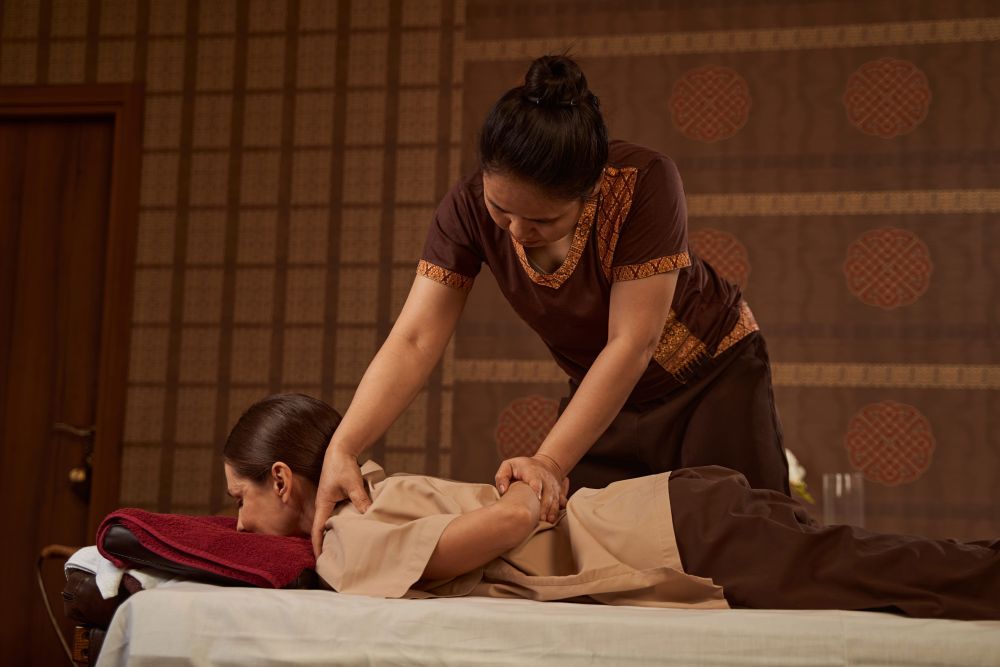
Sometimes the best form of self care is letting someone else do the work. Health Land's therapists are trained to work through the exact spots a self massage cannot quite reach, using techniques built for tighter areas like the neck, shoulders, and upper back. A trained therapist can also read how your body responds in the moment and adjust pressure and technique accordingly, rather than you guessing at what feels right.
Beyond neck and shoulder relief, Health Land also offers a full body massage package for guests who want a more complete reset from head to toe. Sessions take place in a calm, unhurried setting designed to help you properly switch off, so the hour becomes as much about resetting your mind as your muscles. Guests can also combine treatments, pairing a full body massage package with add-ons like a head massage or herbal compress for an even more complete session.
Many guests use a mix of both: quick self care massage ideas for daily upkeep, and a full body massage package every so often for anything that has built up beyond what a few minutes at your desk can fix.
If self care massage on its own is not cutting it anymore, it might be time to book a session instead. Reserve your full body massage at Health Land Spa & Massage, with branches across Bangkok, Pattaya, and Chiang Mai in Thailand. Walk-ins are welcome, and online reservations are available daily from 9:00 a.m. to 11:00 p.m.
References:
Q: What are some self-care massage techniques for neck and shoulders?
A: Simple options include the neck glide, shoulder squeeze, and tennis ball trick. Each targets tight spots in the neck and shoulders and takes just a few minutes to do at a desk or on the couch.
Q: Can self-massage really help with neck and shoulder tension?
A: For everyday tightness, yes. A study that combined ball-based self-massage on the neck and upper back with simple home exercises found short-term improvements in pain among people with muscle tension, though deeper knots may need more than self massage can offer.
Q: How is a full body massage package different from self care massage?
A: A full body massage package is a longer, hands-on session covering the whole body, done by a trained therapist who can reach areas and apply pressure that self care alone can't manage.
Q: How often should I do self care massage at home?
A: There's no fixed rule. Many people find a few minutes daily or every other day helps manage everyday tension, though it works best alongside regular movement and occasional professional massage.




Share With :