

 12/10/2026 14:09:47
On paper, Shiatsu and Thai massage may look nearly identical: both are oil-free pressure treatments performed fully clothed. In practice, however, they deliver entirely different experiences.
While it is easy to confuse them on a spa menu, each technique engages your body in its own unique way, leaving you with a distinctly different kind of relief. Knowing how Shiatsu vs Thai massage compares makes it easier to book the one that fits what you are after.
Both styles grew out of long traditions of hands-on bodywork, yet they treat the body in very different ways. Seeing the differences between Shiatsu and Thai massage techniques side by side makes that contrast easy to follow.
| Feature | Shiatsu | Thai Massage |
| Origin | Japan, rooted in meridian theory and acupressure | Thailand, rooted in Ayurvedic and yogic traditions |
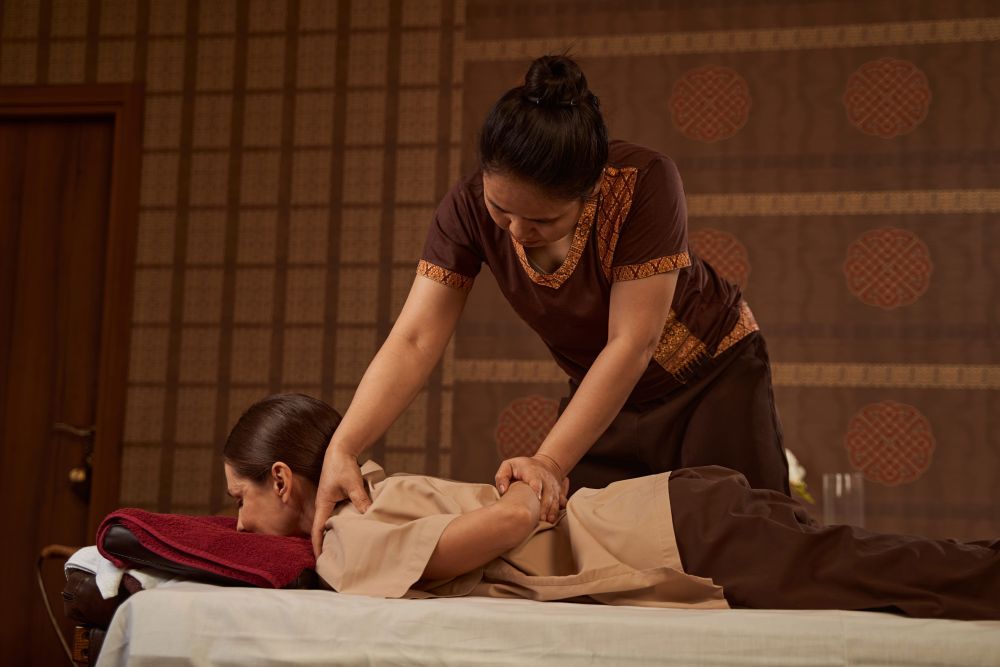
| Technique | Sustained thumb and palm pressure on specific points | Rhythmic compression with palms, forearms, and elbows, plus assisted stretching |
| Movement | You stay mostly still on a mat or table | You are guided through stretches and several positions |
| Feel | Slow, grounding, and meditative | Active and physical |
What they share is just as telling. Both are performed clothed, both skip massage oil, and both aim to support the body's overall balance rather than only working surface muscles.
If you are weighing Thai massage or Shiatsu for improved flexibility and mobility, Thai massage is usually the stronger match. The assisted stretching, hip opening, and hamstring work gently lengthen tight muscles and encourage freer joint movement, which is why it is so often recommended for people who feel stiff or sit for long hours.
It suits a range of everyday situations: desk workers with tight hips, travelers with a stiff back, gym-goers with sore legs, or older adults who simply want easier daily movement. People with whole-body stiffness or an active lifestyle tend to get the most from its dynamic, movement-focused style. Since the therapist guides your limbs into each stretch, it also takes the effort out of loosening up, which many people find easier than stretching on their own.
Shiatsu plays to a different strength. Its sustained pressure on specific acupressure points suits people with one or two stubborn problem areas, such as a stiff neck, tight shoulders, or lower back tension. The steady, held pressure can ease that localized tension and leave you feeling settled and grounded.
The quieter, stillness-based pace also appeals to anyone who prefers not to move much during a session, or who finds active stretching uncomfortable. The intervals between pressure points allow the body to relax, which is why many people find Shiatsu to be more calming than stimulating. If a peaceful, contemplative approach appeals to you more than a physical one, Shiatsu might be a good option.
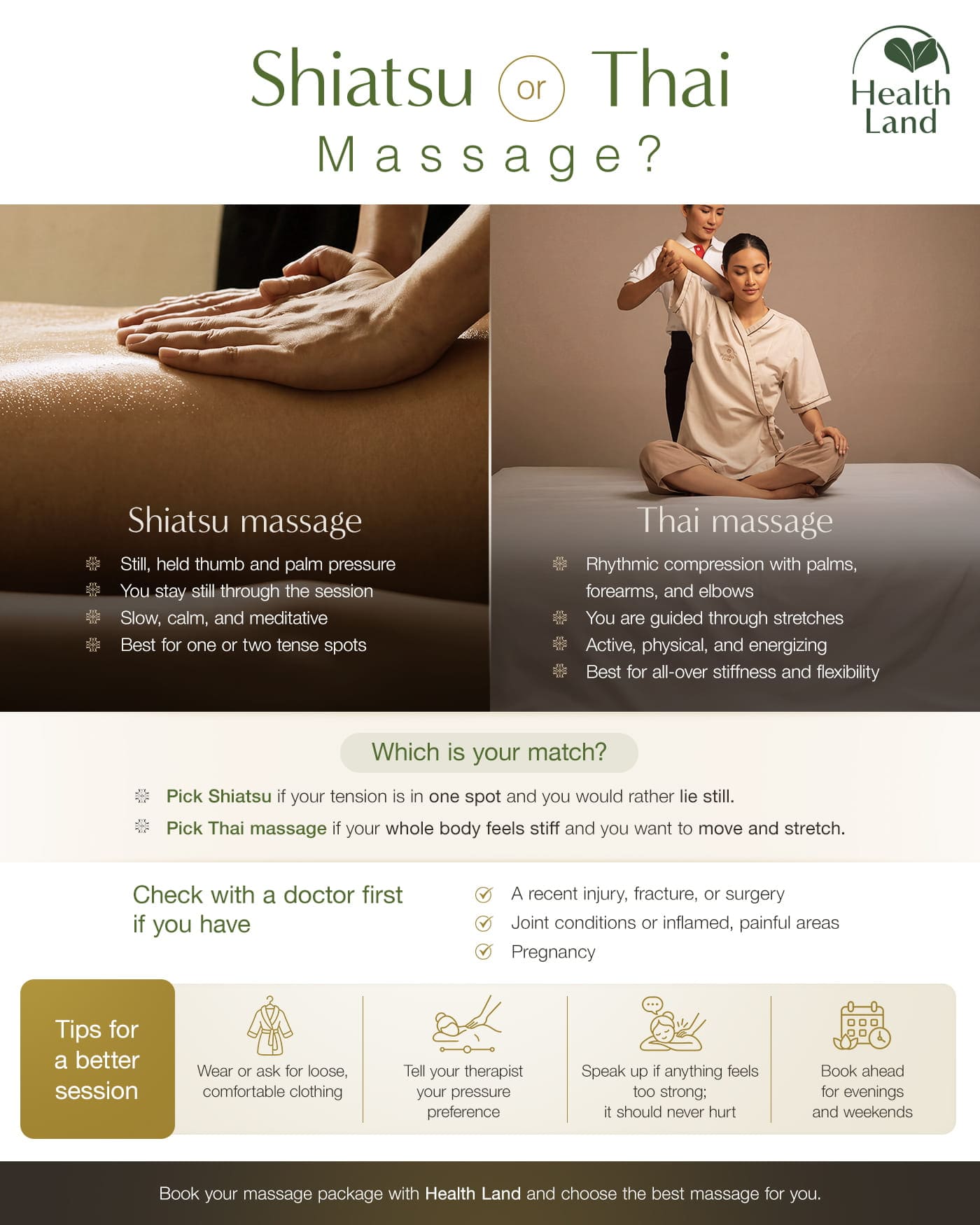
The right pick comes down to what your body needs on the day.
Some people alternate between the two: Thai massage for regular full-body upkeep, and Shiatsu when tension builds in one area. There’s no requirement to choose one style for life, and testing both gradually is often the best way to understand which complements your body. Before the session begins, make sure to talk to your therapist about pressure, comfort, and any injuries, regardless of your choice.
Both styles suit most people, but a few situations call for care:
Both styles can be modified to fit various body types, and neither should cause intense pain or require force. A qualified therapist will monitor and make adjustments as needed.
This is general information rather than medical advice, so speak with a healthcare professional if you are unsure.
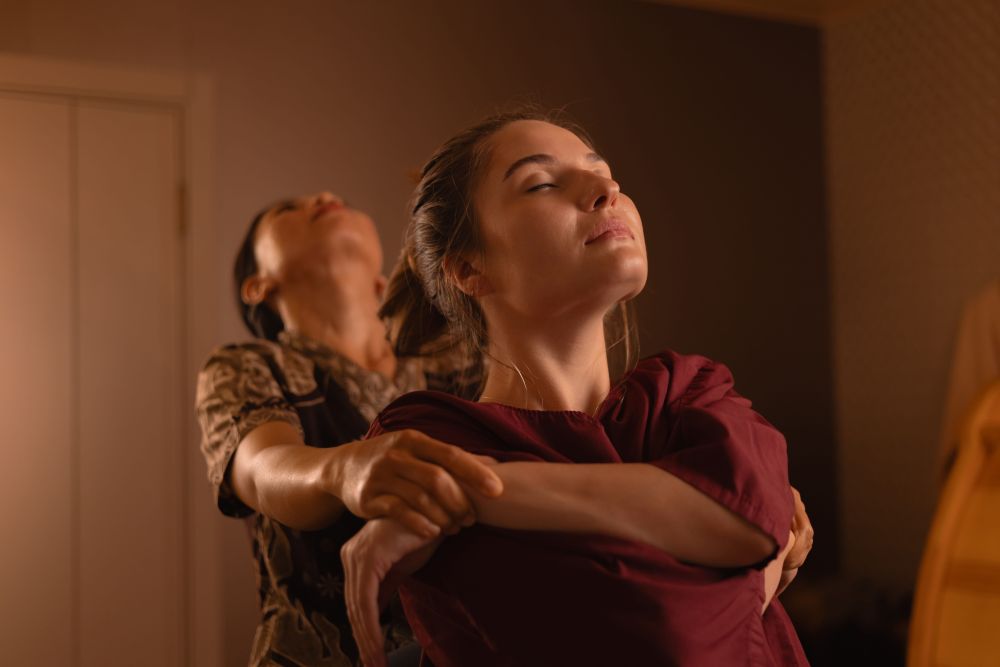
Shiatsu is not on the Health Land menu, but traditional Thai massage is one of its core treatments. Therapists are trained in pressure, assisted stretching, and full-body sequencing, and sessions take place in a calm, unhurried setting. That makes it an easy first visit for newcomers, and a familiar routine for regulars.
If you want a fuller session, you can add a complementary treatment such as aromatherapy oil massage or foot reflexology on the same visit. Whether you are after a massage in Chiang Mai, Bangkok, or Pattaya, there is a branch nearby. All open daily from 9:00 a.m. to 11:00 p.m., walk-ins are welcome, and booking ahead helps for evenings and weekends.
There is no single winner here. Both styles are proven, and the better one is simply the one that matches how your body feels when you book. Many people even keep both in rotation as their needs change through the week or the season.
If Thai massage seems like the right choice for you, feel free to walk in or schedule an appointment online at any Health Land location and experience the benefits of expert pressure and guided stretching on tired, stiff muscles.
References:
A: Thai massage is usually the better choice for flexibility, since it includes assisted stretching and joint movement. Shiatsu focuses on sustained pressure at specific points rather than stretching, so it suits targeted tension more than overall range of motion.
A: Yes. Both are done fully clothed and without oil. For Thai massage, spas usually provide loose, comfortable clothing that allows easy stretching.
A: It depends on what relaxes you. Shiatsu is slow, still, and meditative, while Thai massage is more active and can feel energizing as well as calming. Both aim to leave you feeling more at ease.
A: Neither should. The pressure and stretching can feel strong, but never sharp or painful. Tell your therapist if anything is too much, and they will ease off.



Share With :