

 30/09/2026 16:58:07
Key Takeaways
Every demanding workout leaves the muscles with repair work to do, and it is during recovery, not the session itself, that the body adapts and grows stronger. To support that process, many gym-goers, runners, and athletes now build a post-workout massage into their routine. How much a session helps, though, depends heavily on when it happens. Book at the wrong moment, and a treatment meant to relieve tired muscles can add to the strain instead. Knowing when to book and when to hold off is what separates real recovery from wasted effort.
Exercise produces small amounts of muscle stress that the body repairs during periods of rest. Massage is one of several tools that may support this process and improve comfort between training sessions. Its value lies less in any single dramatic effect and more in the combination of physical and mental benefits it can provide.
Individual results vary, and massage tends to work best when combined with adequate sleep, hydration, and a sensible training load rather than being treated as a standalone solution.
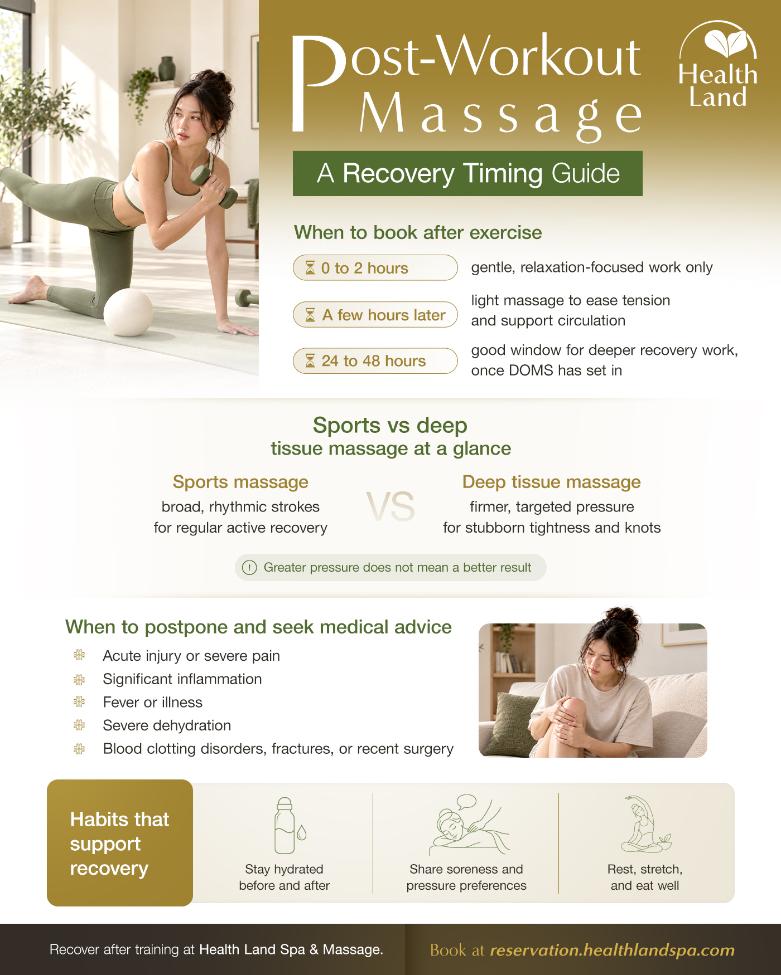
The appropriate timing depends on the workout’s intensity and how the body feels afterward. As a general framework, recovery massage can be approached across three windows:
Delayed Onset Muscle Soreness (DOMS) describes the stiffness and tenderness that set in around 12 to 24 hours after unfamiliar or strenuous exercise. It tends to build and peak between 24 and 72 hours before easing over the following days. A well-timed massage at this stage may help some people feel less sore and more comfortable, though it supports recovery rather than speeding it up. Workout intensity also shifts the timeline. Heavy strength training, marathons, and demanding competitive sports may need a longer recovery period before deep-pressure work becomes advisable.
Two styles come up most often for active recovery. They differ mainly in technique and in how deep the pressure goes.
Sports massage uses broad, rhythmic strokes and moderate pressure, often combined with stretching and joint mobilization. The work stays focused on movement quality and circulation across the muscle groups that carry the most load in training, which keeps it comfortable enough to repeat as part of a regular routine.
Deep tissue massage works more slowly and applies firmer, targeted pressure into the deeper layers of muscle and connective tissue. It concentrates on specific areas of chronic tightness or persistent knots rather than covering the whole body, so a session tends to feel more intense and more localized.
The choice comes down to your goal and your pressure preference. Sports massage suits lighter, movement-focused recovery that you can build into a regular schedule, while deep tissue work suits a specific, stubborn area of tightness that needs concentrated attention. Whichever you choose, greater pressure does not equate to a better outcome, and any discomfort should be communicated to the therapist during the session.
Some soreness after training is normal and usually fades within a few days as the muscles adapt. The signals worth acting on are the ones that persist or start to interfere with progress, rather than ordinary next-day stiffness. Watching for these patterns across a training week helps you judge when a session is genuinely worthwhile.
Consider booking a session when you notice:
If pain is sharp, localized, or does not settle, treat it as a reason for professional assessment rather than a massage. Otherwise, responding to these signals early can keep small issues from building into something that affects your training.
Massage is not appropriate in every circumstance. In the following situations, it is safer to postpone a session and seek medical guidance first:
This information is general in nature and not a substitute for medical advice, so consult a healthcare professional if you are uncertain about your suitability for treatment.
A few straightforward habits can help you gain more from each treatment:
Treating massage as one element of a broader recovery routine, rather than an isolated fix, tends to produce the most consistent results.
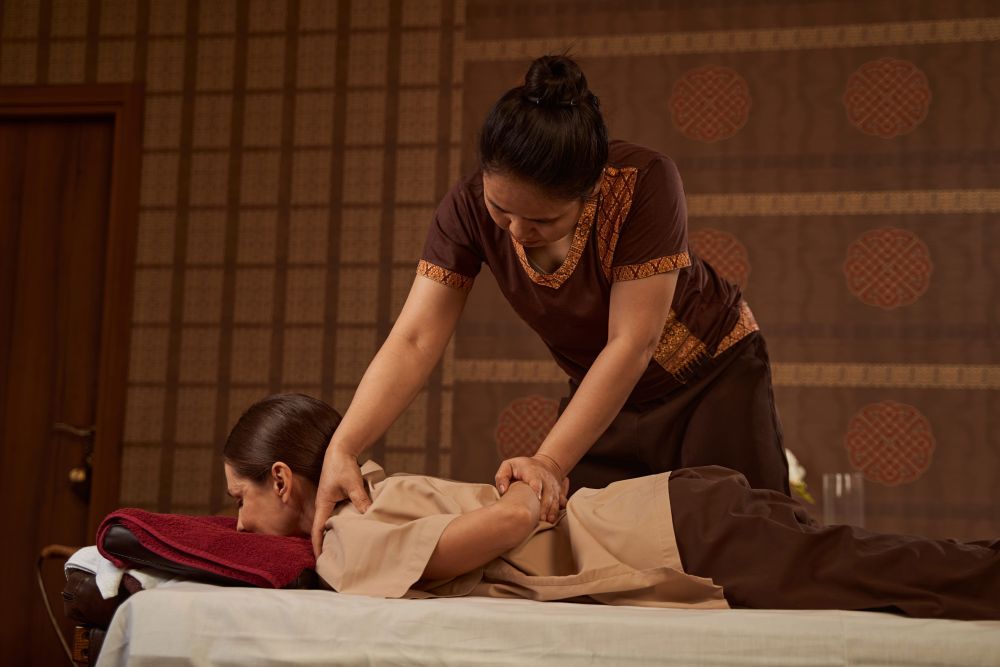
Health Land Spa & Massage brings more than 20 years of experience in traditional Thai wellness, offering recovery-focused massage in Bangkok, Pattaya, and Chiang Mai. Treatments take place in clean, calm, and professional settings suited to tired muscles after a demanding training week.
The treatment menu allows a session to be matched to individual needs, from recovery-focused work after a hard training block to a lighter relaxation massage during an easier week. Available options include traditional Thai massage, aromatherapy oil massage, and Thai herbal compress treatments, and many guests combine a leg-focused session with foot reflexology after long runs or heavy lower-body training. Branches operate daily from 9:00 a.m. to 11:00 p.m., walk-ins are welcome, and advance booking is recommended during evenings and weekends.
Book a recovery-focused massage at Health Land Spa and experience the benefits of professional post-workout care. Reserve your preferred time at reservation.healthlandspa.com.
References
Q: Is it better to get a massage before or after a workout?
A: Both have a role. A light massage before exercise can help the body feel loose, while a session afterward is more focused on easing tension and supporting recovery. For post-training comfort, a gentle massage soon after exercise and a deeper one a day or two later tend to work well.
Q: How long should I wait after intense exercise for deep-pressure work?
A: After heavy lifting, a marathon, or demanding competitive sport, many people wait around 24 to 48 hours before booking deep tissue work. This allows the muscles to settle and gives a clearer sense of how sore they actually are.
Q: How often should I book a recovery massage?
A: This depends on training load and individual response. Common timing includes after long or hard sessions, during lighter recovery weeks, and as monthly maintenance. If a deep session leaves you sore for several days, reduce the pressure or space sessions further apart.




Share With :