

 06/01/2026 11:05:09
Thai massage has captivated wellness seekers worldwide for its unique approach to healing and relaxation. As this ancient practice continues to evolve, many people wonder about the differences between traditional Thai massage and modern Thai massage, and which style best serves their needs. Understanding these distinctions helps you choose treatments that align with your wellness goals and comfort preferences.
Health Land Spa & Massage offers both styles of massage, making our spa one of Thailand's premier destinations to experience authentic Thai healing traditions.
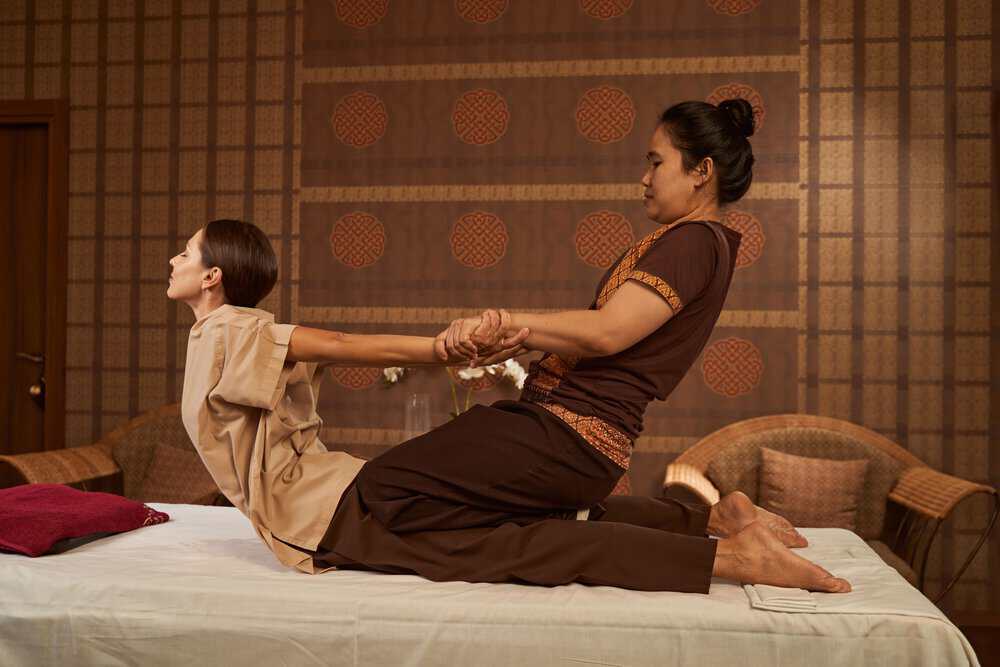
Traditional Thai massage is a therapeutic art that combines elements of yoga, acupressure, and energy work to restore balance and promote wellness throughout your entire body.
The treatment is performed fully clothed, typically while you lie on a comfortable mat on the floor. Your therapist uses their hands, elbows, knees, and feet to apply pressure along your body's energy lines (called Sen lines) while guiding you through assisted yoga-like stretches.
These stretching movements, combined with rhythmic compression and acupressure on specific points, create the distinctive experience of traditional Thai massage. The therapist essentially uses your body weight and leverage to help you achieve long stretches you couldn't reach on your own.
The benefits include improved flexibility as tight muscles and joints gradually release, relief from muscle stiffness accumulated through daily activities or exercise, and increased circulation that delivers fresh oxygen throughout your body.
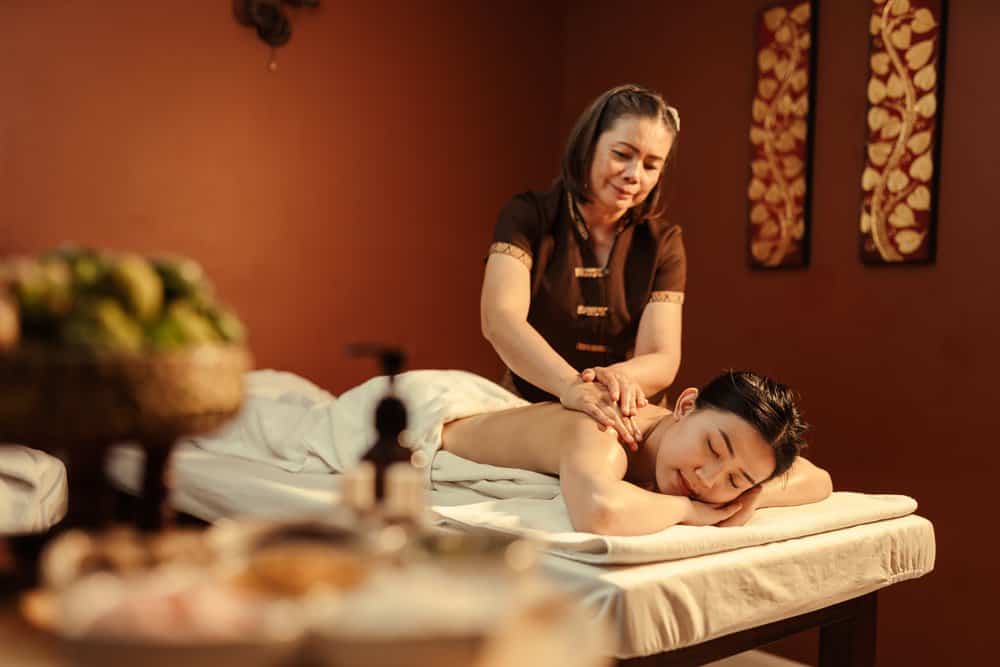
Modern Thai massage represents a contemporary evolution that blends traditional Thai techniques with Western spa methods and aromatherapy principles. This style emerged as Thai massage gained international popularity and adapted to meet diverse preferences.
The treatment is typically performed on a cushioned massage table rather than a floor mat, creating a more familiar spa environment for those accustomed to Western massage.
Therapists often use massage oils or aromatic essential oils that enhance relaxation while allowing smoother, more flowing movements across your skin.
These techniques focus more on gentle, rhythmic strokes combined with softer pressure applications. While some stretching remains, modern Thai massage emphasizes continuous flowing movements that promote deep relaxation rather than the more dynamic stretching of traditional practice.
The benefits center on stress reduction, as the treatment calms your nervous system and relieves tension throughout muscles without the intensity of deep pressure work. This style appeals to those seeking spa-like pampering alongside therapeutic benefits.
Technique
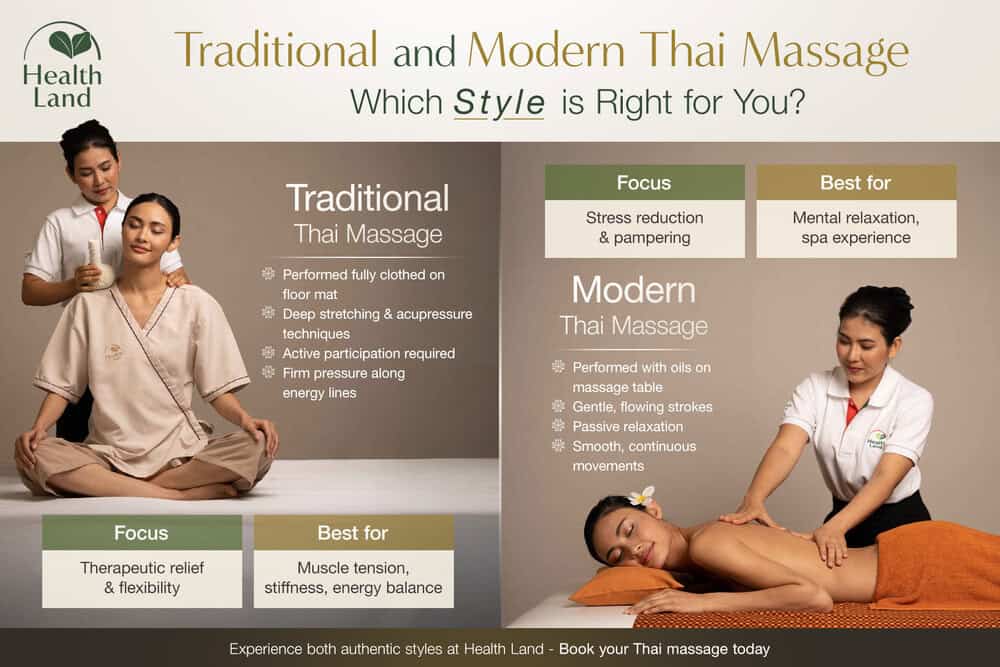
Traditional Thai massage relies heavily on stretching and acupressure applied through clothing, while modern Thai massage uses oil-based techniques with smoother, more continuous strokes against bare skin.
Setting
Traditional sessions happen on floor mats where therapists can use body weight and positioning for leverage. Modern treatments take place on raised massage tables, providing easier access and familiar spa comfort.
Focus
Traditional Thai massage targets therapeutic relief, flexibility improvement, and energy line balancing. Modern Thai massage prioritizes stress reduction, gentle muscle relaxation, and spa-style pampering.
Experience
Traditional massage requires more active participation as you're stretched and repositioned throughout the session. Modern massage offers passive relaxation where you simply receive gentle, flowing touch.
There’s no right choice between traditional Thai massage vs modern Thai massage; the answer changes depending on a wide spectrum of factors.
Traditional Thai massage is best if you want deep muscle relief that addresses chronic tension or stiffness, improved flexibility, therapeutic benefits focused on energy balance and body alignment, or if you're comfortable with firm pressure and active stretching movements.
Otherwise, choose modern Thai massage if you prefer a gentle, calming experience, oil work and smoother movements against your skin, stress reduction and mental relaxation, or if you want a treatment that requires less active participation.
Both traditional Thai massage and modern Thai massage offer unique benefits serving different wellness needs. Health Land has built a reputation on our high service standards to ensure every treatment delivers authentic therapeutic benefits, regardless of which style you choose. We offer both traditional Thai massage, maintaining the floor mat approach and pressure point work, plus modern oil-based Thai massage incorporating aromatherapy and gentler techniques.
This variety lets you experience both styles at the same trusted location and with the same therapist. Guests can request their preferred pressure level and style preferences during booking; our therapists adjust to your comfort.
We encourage you to try both styles to discover which aligns best with your body and wellness goals. Your preferences may evolve based on your physical state, stress levels, and what you need from each session, so it’s good to have experience with both styles.
Visit our Thai massage and spa for treatment today and discover why countless guests return to experience Thailand's healing traditions in all its various forms.
Is traditional Thai massage painful?
Traditional Thai massage uses firm pressure and deep stretching, which some people find intense initially. However, pain should never be part of the experience. Communicate with your therapist about pressure levels; they'll adjust techniques to keep you comfortable while still providing therapeutic benefits. Some muscle soreness afterward is normal, similar to the post-exercise feeling.
How long does a session typically last?
Most Thai massage sessions last 60, 90, or 120 minutes. Traditional Thai massage is often recommended for longer sessions (90-120 minutes) because the stretching and energy work take time to complete thoroughly. Modern Thai massage is commonly booked for 60-90 minutes.
Can beginners choose traditional Thai massage?
Absolutely. Beginners can absolutely enjoy traditional Thai massage. Inform your therapist if this is your first experience and they'll guide you through the process and use gentler pressure while your body adjusts to the stretching. Many first-timers discover they love the therapeutic intensity once they relax into the experience.
Should I book in advance?
Booking in advance is recommended, especially during peak hours, weekends, and holiday periods. Health Land accepts walk-ins when therapists are available, but booking guarantees your spot and lets you plan your wellness routine effectively.
References:
1. Thai Massage Learning Guide. (2023-07-12). thailand.go.th. Retrieved December 9, 2025, From https://thailand.go.th/issue-focus-detail/002_010
2. Ministry of Public Health Has Set Guidelines for Traditional Thai Massage Standards. (n.d.). thailand.prd.go.th. Retrieved December 9, 2025, From https://thailand.prd.go.th/en/content/category/detail/id/48/iid/347274




Share With :