

 05/10/2026 17:59:29
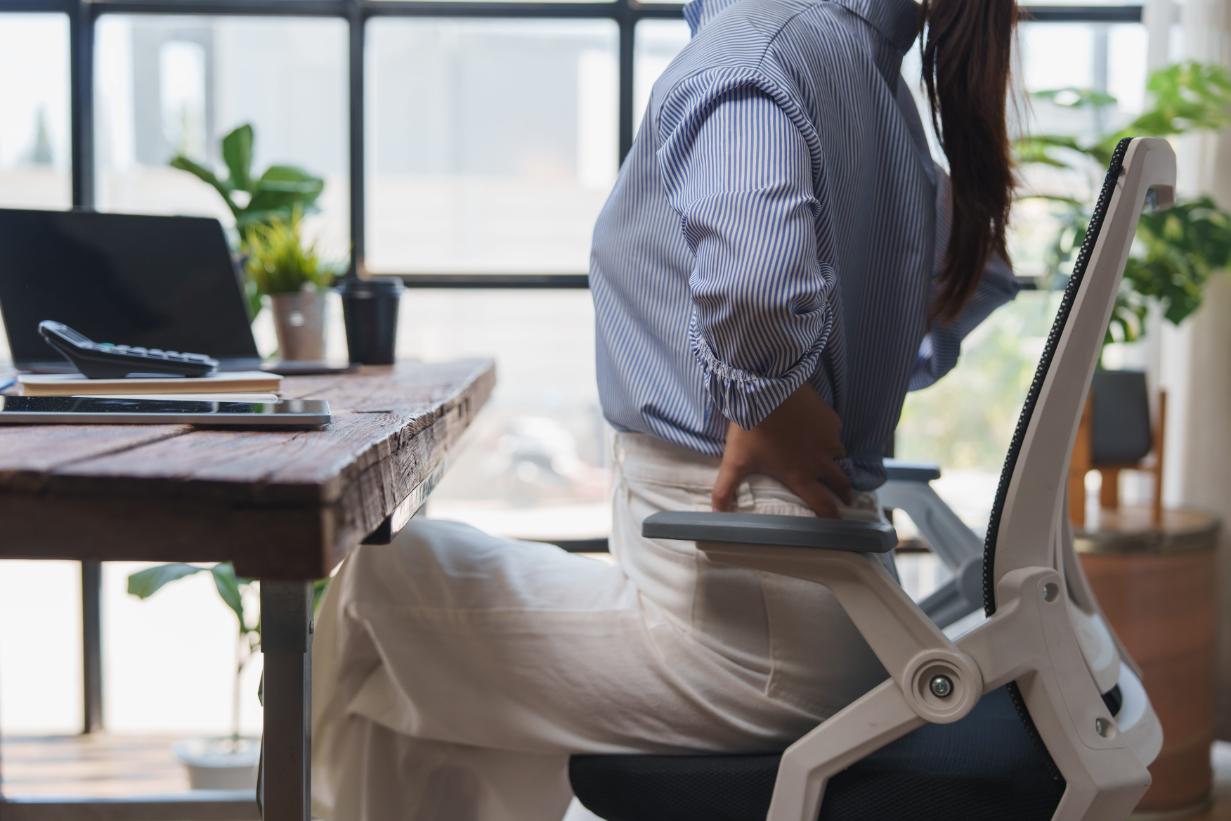
Sitting for long periods can leave the lower back, hips, shoulders, and neck feeling stiff or tense. Massage therapy for back pain may help ease muscle tension and provide short-term relief for some types of back discomfort, particularly when tight or overworked muscles contribute to the problem. Various massage techniques apply varying degrees of pressure, motion, and stretching, so selecting the appropriate one depends on the location of your tension and the type of experience you desire.
Choosing a massage depends on the area and severity of muscle tightness, your pressure tolerance, and whether stretching suits you.
At Health Land, our therapists can modify pressure and techniques to focus on the lower back, hips, glutes, and the muscles around the spine according to your requirements.
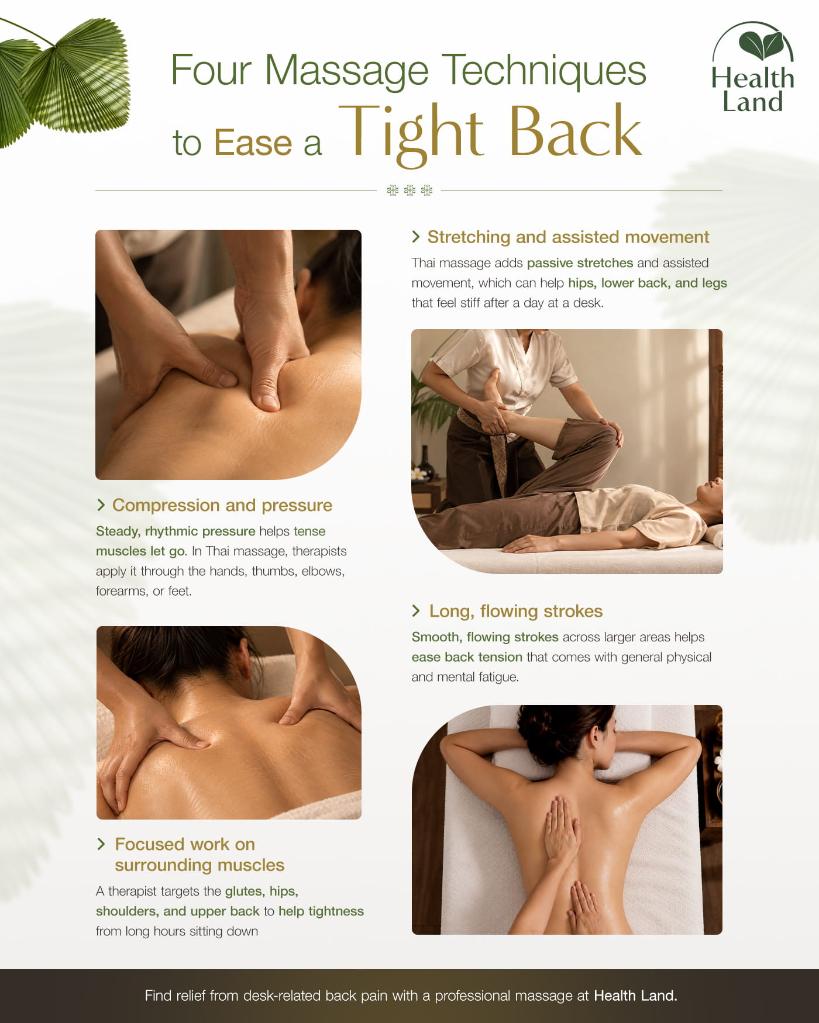
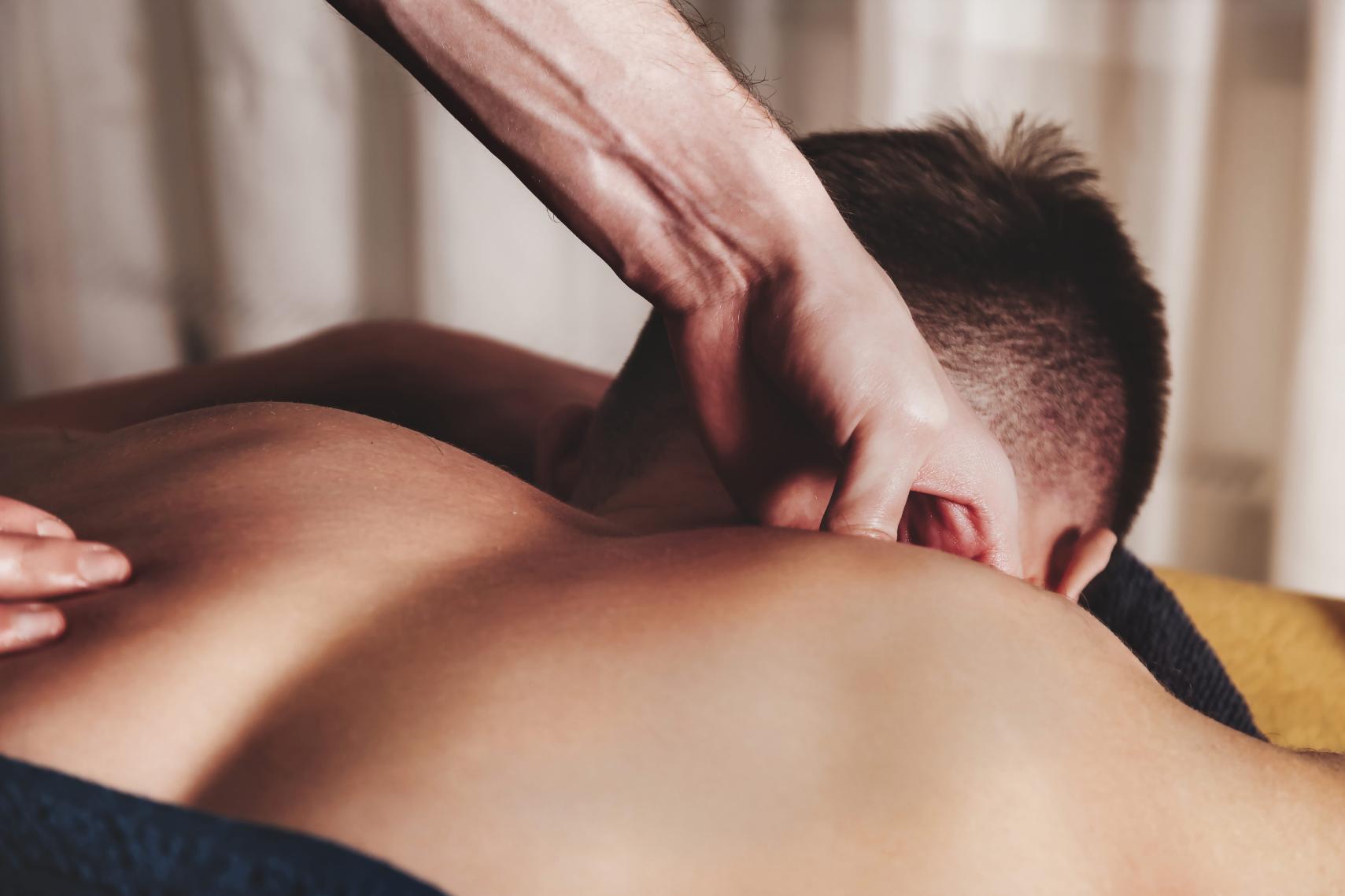
Rhythmic pressure and compression can be used around tense muscles to help them relax. Thai massage applies pressure through the hands, thumbs, elbows, forearms, or feet, depending on the technique and therapist.
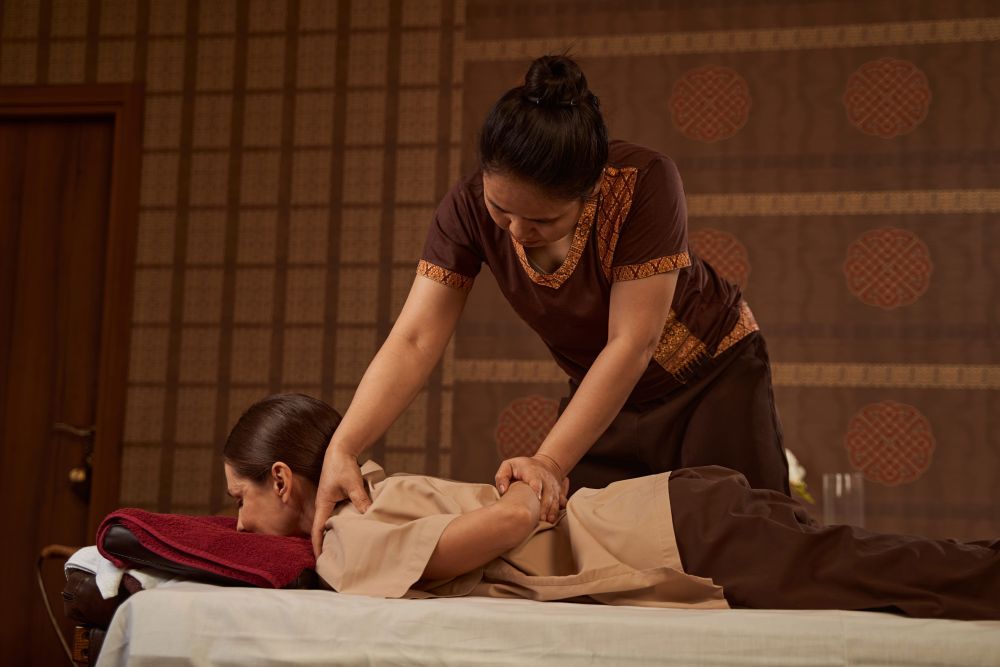
Thai massage combines massage with passive stretches and assisted movements. This can be particularly relevant for people who feel stiff through the hips, lower back, and legs after spending much of the day seated. Stretching should stay within a comfortable range rather than forcing painful movement.
Aroma oil massage uses smooth, flowing strokes with massage oil to work across larger areas of the body. The slower rhythm and continuous movements can make it suitable for people whose back tension comes with general physical and mental fatigue.
Back discomfort does not always originate from the back muscles alone. A session may also address the glutes, hips, shoulders, and upper back when these areas feel tight from prolonged sitting, and the therapist can adapt the session to where tension is most noticeable.
Thai massage can be an option for people experiencing muscular tightness and stiffness associated with prolonged sitting. Its combination of pressure, compression, and assisted stretching gives it a different approach from an oil-based massage, and a session may focus on the lower back and surrounding hips and legs rather than applying strong pressure directly over the spine. Not every instance of lower back pain can be resolved through Thai massage. Ongoing, intense, or unexplained pain ought to be evaluated by a healthcare provider instead of being treated solely with massage.
Massage frequency depends on your symptoms, activity level, daily habits, and response to treatment. Regular massage can fit into a broader self-care routine, but it should not replace movement, ergonomic adjustments, or professional assessment when pain persists. Office workers can relieve their backs between sessions by regularly changing positions, taking movement breaks, and properly arranging their desk and chair.
Choose Thai massage if you want a more active treatment involving pressure, stretching, and assisted movement. Choose an aroma oil massage if you prefer flowing strokes, oil, and a more relaxing experience.
| Thai Massage | Aroma Oil Massage | |
| Pressure | Moderate to firm, depending on technique and preference | Generally gentle to moderate |
| Method | Traditionally performed without oil | Uses massage oil |
| Movement | Includes assisted stretching and passive movements | Focuses more on flowing massage strokes |
| Best for | Stiffness, muscular tension, and people who enjoy stretching | General tension, relaxation, and those who prefer a gentler session |
| Overall experience | More active and structured | Slower and more relaxing |
| For desk workers | Useful when prolonged sitting leaves the body feeling stiff | Useful when desk work leaves you feeling generally tense and tired |
Table: Thai Massage vs. Aroma Oil Massage for Desk-Job Back Pain.
The most suitable type of massage depends on the tension you’re currently experiencing and the kind of massage you find most comfortable. Make sure to inform the therapist about where you experience pain, the duration of it, and if specific movements or positions aggravate it.
*Important note: Avoid treating massage as a solution for every type of back pain. Numbness, weakness, pain following a significant injury, bowel or bladder changes, fever, or other concerning symptoms require medical attention.
Health Land's Thai massage takes a traditional approach with pressure and stretching, which suits guests looking to ease stiffness and tightness after a long week. The aroma oil massage offers a gentler, relaxation-focused alternative using oil and flowing techniques. Deciding between the two should depend on how your body feels that day: focus on stretching if you feel stiff, or opt for soothing aromatherapy if you’re just tired.
Book your massage at Health Land Spa & Massage, with branches across Bangkok, Pattaya, and Chiang Mai. Walk-ins are welcome, and online reservations are available daily from 9:00 a.m. to 11:00 p.m.
References:
Q: Which type of massage is best for back pain from sitting all day?
A: There is no single best option. Thai massage suits general stiffness through pressure and stretching, while aroma oil massage suits those who prefer gentler, relaxation-focused strokes. The right choice depends on where your tension sits and your comfort with pressure.
Q: Can a Thai massage help lower back pain caused by desk work?
A: Thai massage can be an option for muscular tightness and stiffness from prolonged sitting, focusing on the lower back, hips, and legs rather than strong pressure over the spine. Persistent or severe pain should be assessed by a doctor.
Q: How often should office workers get a massage for back and posture problems?
A: It depends on your symptoms and how you respond. Massage can be part of a broader routine, but it should not replace movement, ergonomic adjustments, or medical assessment if pain persists or worsens.
Q: What massage technique is best for lower back pain?
A: Techniques like compression, assisted stretching, and focused work around the hips and glutes can help ease tight muscles. Stronger pressure is not necessarily better, and technique should be adjusted to your comfort.
Q: Should you get a massage if you have chronic back pain?
A: Massage may offer short-term relief for chronic muscular tension, but chronic back pain should first be assessed by a healthcare professional to rule out underlying causes and guide appropriate treatment.
Q: What are the benefits of Thai massage therapy for back pain and muscle tension?
A: Thai massage may help ease muscular tension and stiffness from prolonged sitting, using pressure and assisted stretching that can also support flexibility. It offers short-term relief for muscular back tension rather than a cure and works best alongside movement and good posture habits.




Share With :