

 05/10/2026 17:52:31
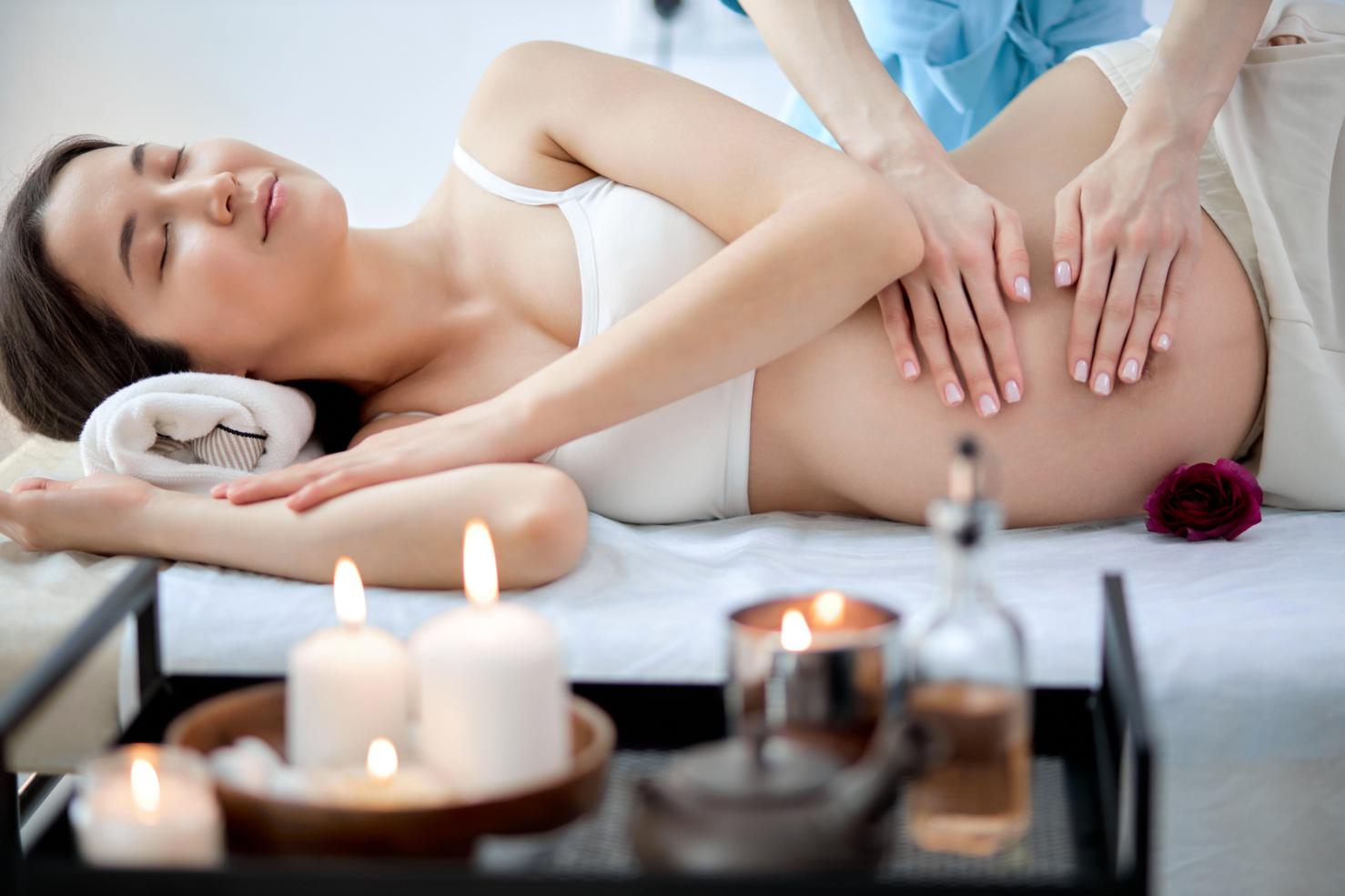
Massage during pregnancy is generally considered safe for many people after the first trimester, though it works best with your doctor's okay and a therapist trained to adjust pressure and positioning. Prenatal massage uses gentle pressure and a side-lying position, and it steers away from the abdomen, deep work on the legs, and certain pressure points. First-trimester and high-risk pregnancies call for extra caution and medical clearance first. Traditional Thai massage can be adapted with gentler, slower techniques, though it is not suitable for every pregnancy. If you are looking for relaxation-focused options, explore Health Land's body massage packages and let the team know you are pregnant so they can guide your choice.
During pregnancy, aches and stiffness are to be expected. As the body shifts and the bump expands, the lower back, hips, shoulders, and legs frequently bear additional stress, making a massage seem like a much-needed relief. It naturally raises the question of whether it is truly safe.
For many healthy pregnancies, the brief response is yes, provided certain conditions are met. Your health status, timing, technique, and positioning all play a role. Before going for a massage during pregnancy, it’s worth knowing which techniques to avoid, how Thai massage changes, whether a massage gun fits in, and how to choose a session that feels comfortable and safe.
The answer depends on your stage of pregnancy and your health. Massage during pregnancy is widely considered safe for many people after the first trimester, provided it is adapted for pregnancy and cleared by your doctor or midwife.
Widely practiced traditional Thai massage employs firm pressure, deep stretches, and twisting motions that are unsuitable for pregnancy in their usual form. A pregnancy-safe version is milder, slower, and emphasizes relaxation and comfort over intensity. However, massage may not be suitable for every pregnancy. If your situation is high-risk or you face any complications, getting medical clearance is the priority.
Many therapists prefer to wait until after the first trimester, the first 12 weeks. Early pregnancy can bring nausea, dizziness, and fatigue that a massage may make worse, and some clinics ask for a doctor's release before treating anyone in the first trimester.
There is little evidence that massage causes miscarriage, but because so many miscarriages happen early, the cautious approach is common practice.
Pregnancy changes circulation, hormones, posture, and joint stability, so pressure and positioning have to be adjusted with care. Pregnancy massage is simply massage therapy adapted for these changes.
Tell your therapist how each area feels, and speak up if anything is uncomfortable.
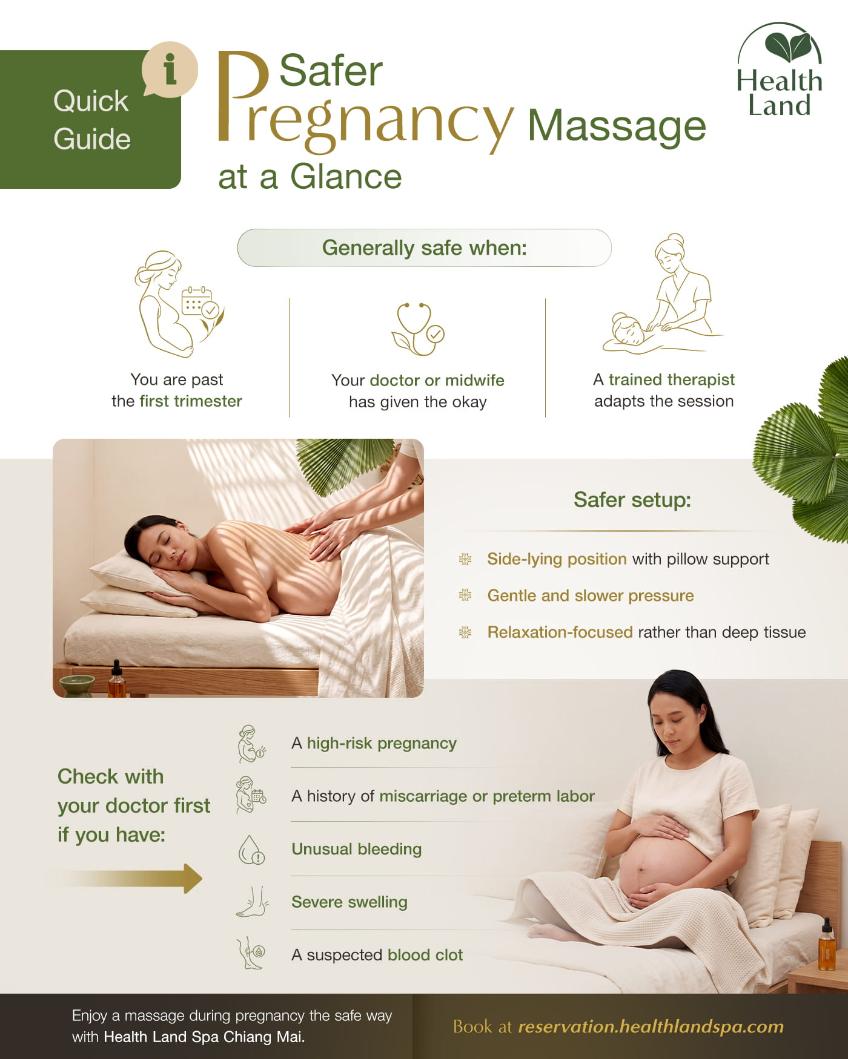
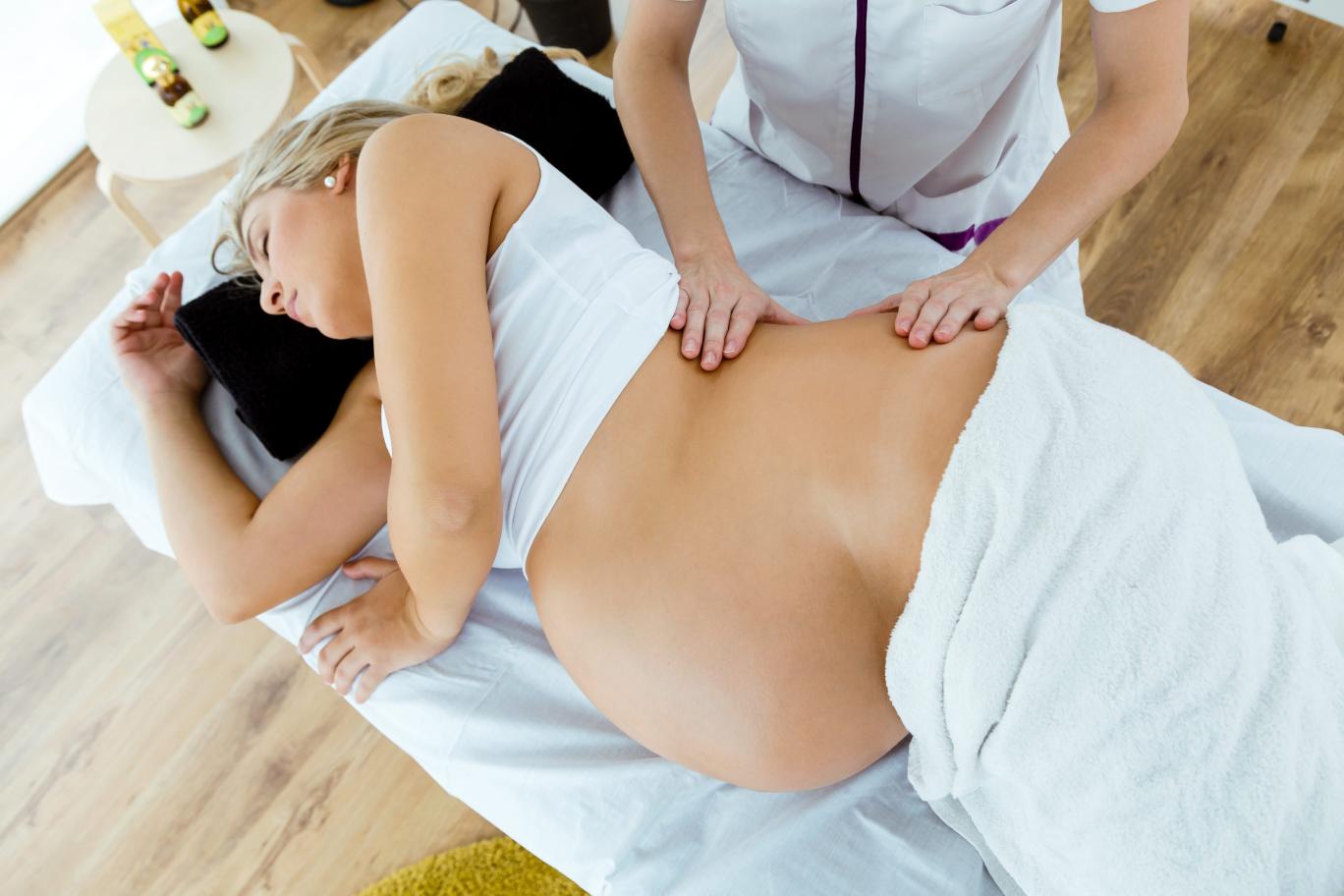
Traditional Thai massage combines acupressure, compression, and assisted stretching along what Thai tradition calls sen, or energy lines. Sen lines are part of traditional Thai theory rather than a proven anatomical map, so it helps to see them as a cultural framework.
In its standard form, the deep stretching and firm pressure make traditional Thai massage a poor fit for pregnancy. A pregnancy-adapted session keeps the calming, rhythmic elements while dropping the intense stretches and strong pressure, and the therapist focuses on gentle relief for the neck, shoulders, upper back, hips, and legs, using slower movements throughout for relaxation and circulation support.
This is a common question, and the honest answer is that research on it is limited. A massage gun delivers rapid percussion into the muscles, which is stronger than a hand massage, so extra caution is advised. Check with your doctor before using one during pregnancy.
If your provider agrees, a few sensible precautions apply:
For deeper work, a therapist trained to adapt techniques for pregnancy is generally the safer choice.
Some situations call for medical advice before any massage. Talk to your doctor or midwife first if you have or have had:
During or after a session, stop and seek medical care if you experience pain, dizziness, vaginal bleeding, contractions, or shortness of breath. Massage supports comfort and relaxation during pregnancy, but it does not replace medical care.
If you are pregnant and thinking about a massage, start with getting the green light from your doctor, then choose a professional setting where you can talk through what you need. At Health Land Spa & Massage, we have more than 20 years of experience in traditional Thai wellness, with locations in Bangkok, Pattaya, and Chiang Mai, and treatments carried out in calm, private rooms.
Let the team know your stage of pregnancy and any medical guidance you have received, and they’ll point you toward gentler, relaxation-focused options as well as adjust pressure and positioning for comfort. If you’re planning a wider relaxation experience, our relaxation-focused body massage packages are ideal, where you get to choose with your therapist and doctor in mind. Opening hours vary slightly by branch, so it helps to check your preferred location before you visit.
Book your ideal choice from our body massage packages at Health Land Spa & Massage for a calming massage during pregnancy. Reserve your preferred time with us and our therapists will match the pressure and position to your comfort for the best experience.
References:
Q: Is a massage safe during pregnancy?
A: For many healthy pregnancies, massage is considered safe after the first trimester when it is adapted for pregnancy and cleared by your doctor. High-risk pregnancies and the first trimester call for extra caution and medical advice first.
Q: Is Thai massage therapy safe during pregnancy?
A: Traditional Thai massage in its standard form uses firm pressure and deep stretching that are not suited to pregnancy. A gentler, pregnancy-adapted version focused on relaxation may be an option after the first trimester, with your provider agreeing to it.
Q: Is a massage gun safe during pregnancy?
A: Research is limited, so check with your doctor first. If approved, use low settings on large muscles like the shoulders and calves, avoid the abdomen and lower back, and stop if anything feels uncomfortable.
Q: When should I avoid massage during pregnancy?
A: Avoid it, or get medical clearance first, if you have a high-risk pregnancy, preeclampsia, a history of miscarriage or preterm labor, unusual bleeding, severe swelling, or a suspected blood clot.
Q: What position is used for pregnancy massage?
A: A side-lying position supported by pillows is common, since lying face down is impractical and lying flat on the back later in pregnancy can reduce blood flow.




Share With :