

 06/01/2026 10:52:39
Tossing and turning at night? You're not alone. Millions struggle with poor sleep quality, reaching for pills and gadgets when a simple solution might be right at your… feet.
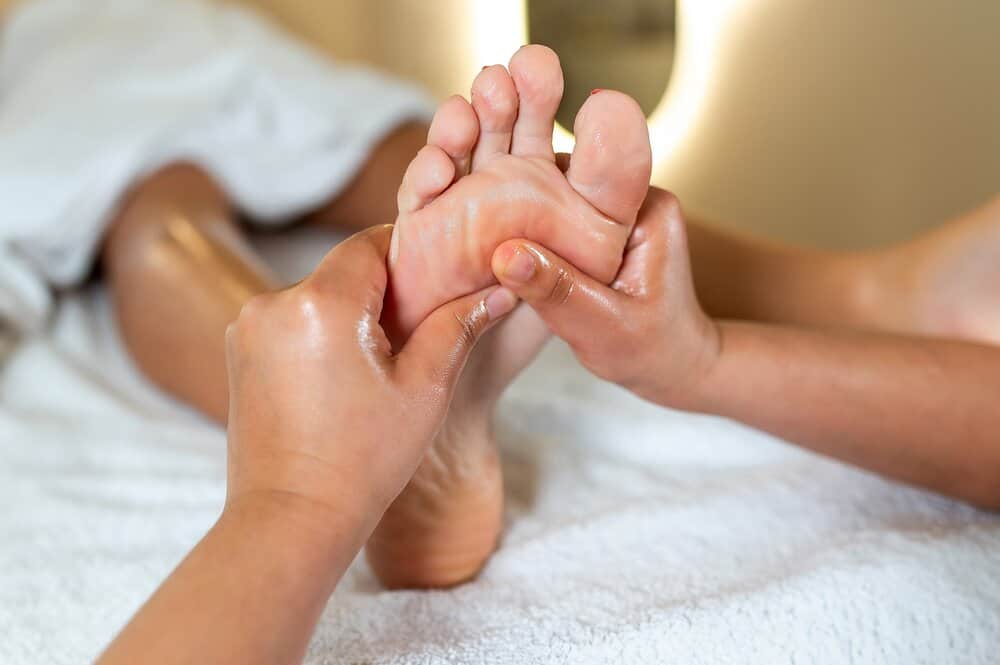
Getting a foot massage helps to activate your body's natural relaxation response. When you apply gentle pressure to specific points on your feet, you trigger a cascade of calming effects throughout your nervous system, lowering stress hormones and preparing your body for better sleep.
If you're dealing with occasional restlessness or even chronic insomnia, proper foot massage techniques can transform your nights.
Health Land Spa has helped thousands of customers achieve better sleep through traditional Thai foot massage over our 20+ years of service. Here's everything you need to know about using foot massage as your natural sleep aid.
Your feet have over 7,000 nerve endings that connect to every organ and system in your body. When you massage these points, you're communicating directly with your nervous system. Here's what happens physiologically:
Parasympathetic activation: A foot massage helps your body transition from "fight or flight" mode to "rest and digest" mode. This is the state you need for quality sleep.
Cortisol reduction: Studies show that reflexology significantly lowers cortisol, your primary stress hormone. Lower cortisol means easier sleep onset and fewer middle-of-the-night awakenings.
Improved circulation: Gentle manipulation increases blood flow, which helps remove metabolic waste and delivers oxygen more efficiently. Better circulation equals less restlessness and muscle tension.
Reflexology effects: Traditional Thai medicine recognizes specific zones on the feet that correspond to different body systems. Stimulating these areas promotes balance and relaxation throughout your entire body.
After a good foot massage, your body receives a clear signal that it's time to wind down, making the transition to sleep feel natural rather than forced.
Timing is crucial if you want to reap the benefits of foot massage for improved sleep. Plan your session 30 to 60 minutes before your target bedtime. This gives your body adequate time to relax fully without the immediate pressure of needing to fall asleep right away.
Create the right atmosphere. Dim the lights or use soft candlelight. Play gentle instrumental music or nature sounds at low volume. The goal is to eliminate anything that might spike cortisol or stimulate your mind.
Choosing the right oil for your foot massage before sleep can also make a substantial difference in its effectiveness. Here are some of our top recommendations:
Lavender oil: The most researched sleep aid, proven to increase slow-wave sleep and reduce anxiety. Mix 3-4 drops with a carrier oil.
Chamomile: Particularly effective for those whose minds race at bedtime. Its apigenin content binds to brain receptors that promote calm.
Sandalwood: Provides grounding effects and has been shown to reduce wakefulness after sleep onset.
Tip: Always dilute essential oils in a carrier like sweet almond oil, jojoba oil, or coconut oil. A safe ratio is 3-5 drops of essential oil per tablespoon of carrier oil. Warm the mixture slightly by rubbing it between your palms before application.
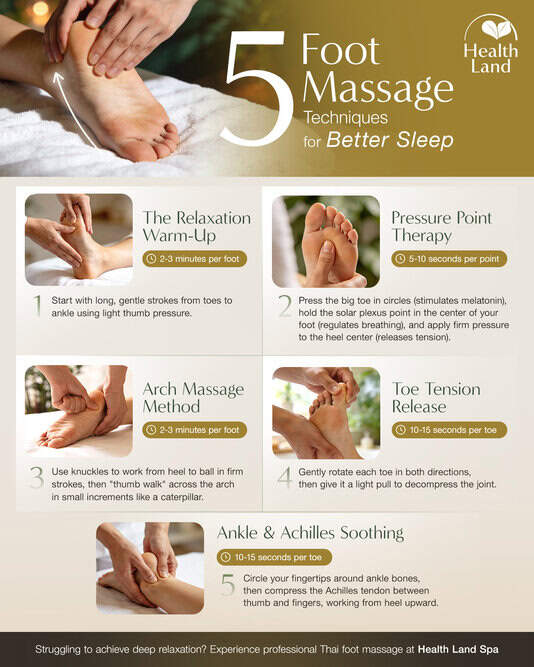
Start with long, gentle strokes from your toes up to your ankle. Use your thumbs to apply light pressure along the top of your foot, then the bottom. This signals to your nervous system that something soothing is about to happen. Spend 2-3 minutes on each foot with these warming strokes. The pressure should be firm enough to feel purposeful but gentle enough to remain completely comfortable.
The solar plexus point sits in the center of your foot, just below the ball. Press your thumb into this spot and hold for 5-10 seconds while breathing deeply. This point is linked to your diaphragm and helps regulate breathing patterns for sleep.
The big toe technique targets your pineal gland, which produces melatonin. Gently squeeze and massage your big toe in small circles for about a minute. Many people report feeling drowsy within minutes of this technique.
For the heel pressure point, use your thumbs to apply firm pressure to the center of your heel, working in small circles. This area corresponds to your sciatic nerve and pelvic region, releasing deep-seated tension.
Your arch contains numerous nerve endings. Make a loose fist and use your knuckles to work across the arch from heel to ball in firm strokes. Follow with thumb walking—press your thumb into the arch and "walk" it across in small increments, like a caterpillar moving. This technique releases stored tension and often triggers immediate relaxation responses.
Each toe deserves individual attention. Gently rotate each toe in both directions, then gently pull it to decompress the joint. This releases tension you didn't know you were holding. Spend about 10-15 seconds per toe.
Finish with circular motions around your ankle bones, using your fingertips to trace small circles. Then gently compress your Achilles tendon between your thumb and fingers, working from heel upward. This final step helps transition your body into a state of complete rest.
Consistency transforms foot massage for better sleep from a nice practice into a powerful sleep tool. Your body learns the pattern, and after about a week of nightly sessions, simply starting the massage sequence can trigger drowsiness.
Pair your massage with breathing techniques. Try the 4-7-8 method: inhale for 4 counts, hold for 7, exhale for 8. This combination significantly amplifies the relaxation response.
Duration matters. While even 5 minutes helps, aim for 10-15 minutes per foot for optimal results. This is sufficient time to work on each central point without feeling overstimulated.
You should feel warmth spreading through your feet, start breathing more deeply, and potentially yawn or feel your eyelids getting heavy. If you're tensing up or feeling discomfort, lighten your pressure.
DIY techniques offer genuine benefits, but chronic sleep issues often respond more effectively to professional care. A trained therapist at a foot massage spa can apply precise pressure to reflexology points in ways that self-massage simply can't match.
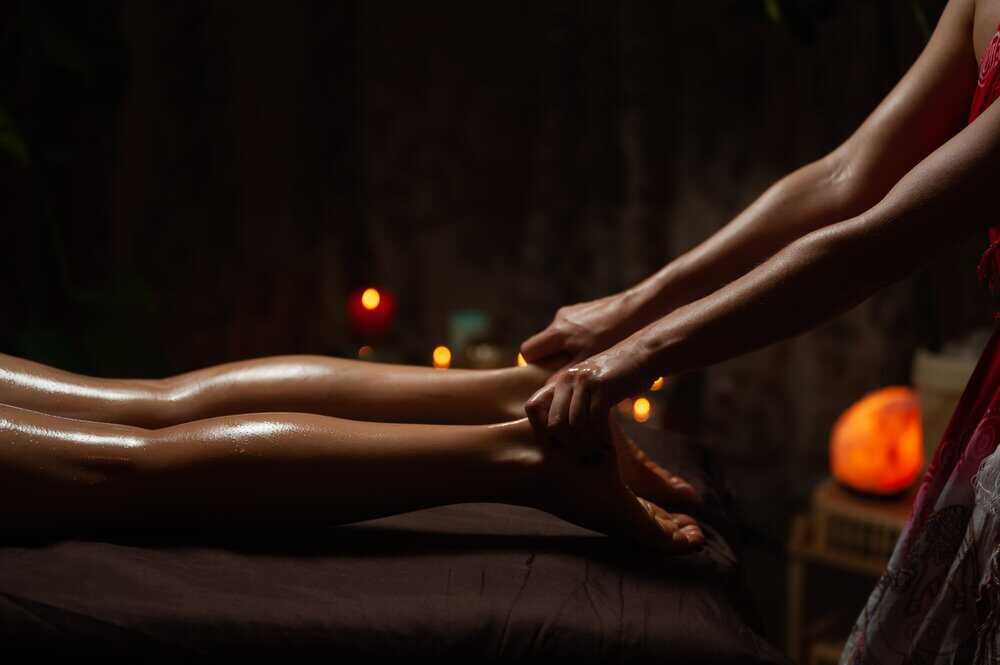
At Health Land Spa, our therapists begin with a brief consultation about any issues you might want to address. Subsequently, you’ll enjoy a 45-60 minute treatment that includes aromatic oils, specifically blended for relaxation.
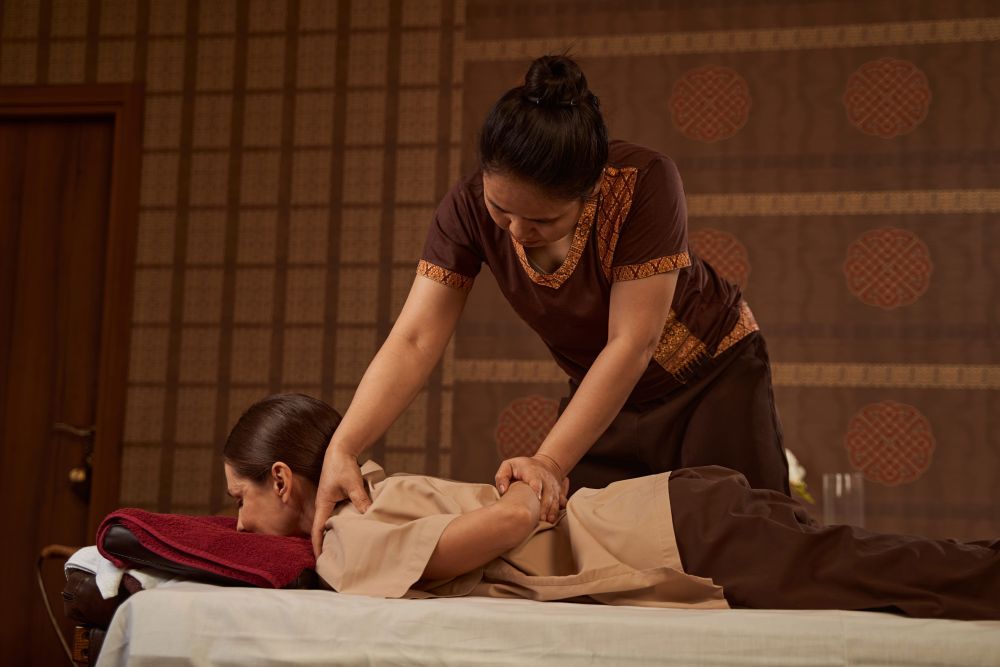
You'll experience a combination of Thai massage techniques, pressure point work, and stretching that reaches deeper than what self-massage can achieve.
Achieving the deep relaxation you need for truly restorative sleep is possible at Health Land. Our foot massage spa utilizes proven techniques, carefully refined and tailored to provide you with the relief you need.
Indulge in a calming environment, premium essential oils, and authentic Thai massage principles to guide you into complete tranquility. With locations across Bangkok, Chiang Mai, and Pattaya, peaceful sleep is now within reach. Book your appointment today.
References:
1. Huang, H. C., Lin, C. C., Huang, Y. C., Lee, M. S., & Shyu, Y. I. (2021). Can foot reflexology be a complementary therapy for sleep disturbances? Evidence appraisal through a meta‐analysis of randomized controlled trials. Journal of Advanced Nursing, 77(5), 2381–2394. https://doi.org/10.1111/jan.14699
2. Lillehei, A. S., Halcon, L. L., Savik, K., & Reis, R. (2015). Effect of inhaled lavender and sleep hygiene on self-reported sleep issues: A randomized controlled trial. Journal of Alternative and Complementary Medicine, 21(7), 430–438. https://doi.org/10.1089/acm.2014.0327




Share With :